
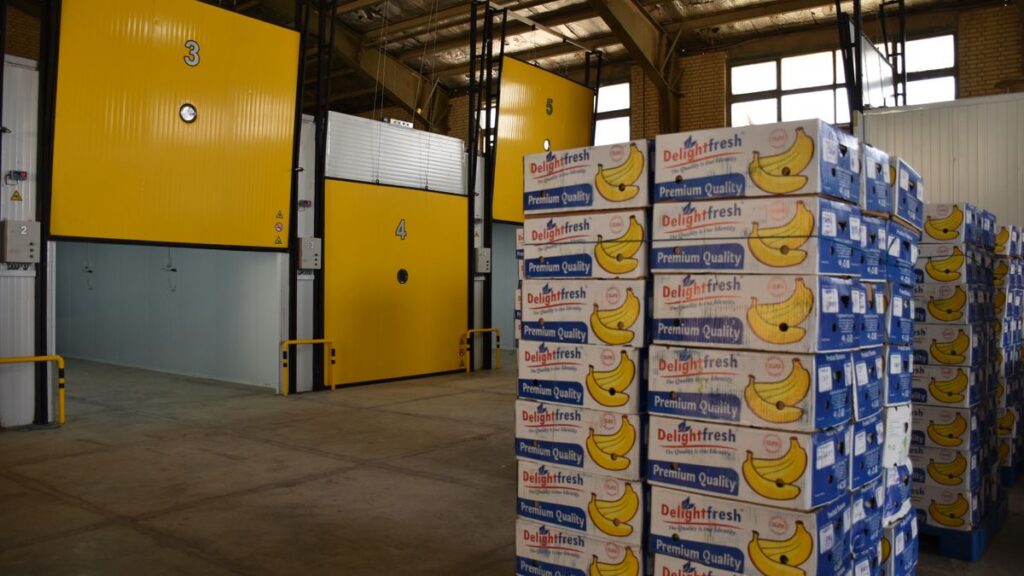
Equipment for pulling product through the freezing zone fast enough to keep ice crystals small — a different duty from cold storage, and not something a storage room can do.
- 3,882products across this application
- 1,035verified manufacturers
- 5equipment groups
WhatFreezing speed, not storage temperature
A blast freezer exists to move product through the −1 to −5 °C zone quickly, because that is where ice crystals form. Fast freezing produces small crystals that leave cell walls intact; slow freezing produces large ones that rupture them, and the damage shows up as drip loss when the product thaws. Air velocity over the product typically runs 3–5 m/s, against almost nothing in a storage room.
WhoWho needs a blast freezer
Meat and poultry processors, seafood and fishery plants, ready-meal and bakery producers, ice-cream makers, and the contractors who build tunnel and cabinet systems for them. Almost always a business that already has cold storage and has discovered that the storage room cannot freeze incoming product fast enough.
WhyWhy a storage room will not do it
This is the most common and most expensive mistake in the scenario. A −25 °C storage room will eventually freeze anything put in it, so it looks like it works — but taking twelve hours instead of four produces visibly worse product, and meanwhile the incoming warm load pushes the whole room off setpoint and puts everything else already stored at risk. Blast capacity has to be separate.
HowSizing on pull-down, not on volume
Work from the batch: product mass, entry temperature, target core temperature, and the time allowed. That gives a peak load several times higher than a storage room of the same size. Then design the airflow — velocity over the product surface matters as much as refrigeration capacity, which is why racking and air baffles are part of the specification rather than an afterthought.
Equipment this application needs
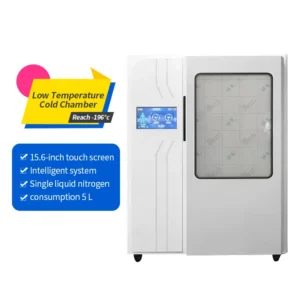 Blast freezers & tunnels
Freezing Equipment678
Cabinets, trolleys and continuous tunnels sized on batch pull-down time.
Blast freezers & tunnels
Freezing Equipment678
Cabinets, trolleys and continuous tunnels sized on batch pull-down time.
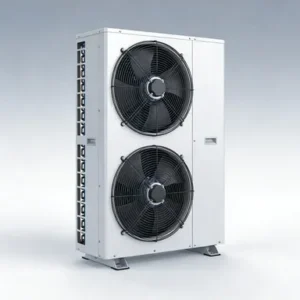 Low-temperature packs
Condensing Units825
Peak load during pull-down is several times the storage duty, and the pack has to hold suction pressure at −40 °C evaporating.
Low-temperature packs
Condensing Units825
Peak load during pull-down is several times the storage duty, and the pack has to hold suction pressure at −40 °C evaporating.
 High-velocity coils
Evaporators792
Wide fin spacing to survive heavy frosting, and fans sized for velocity over the product rather than just air change rate.
High-velocity coils
Evaporators792
Wide fin spacing to survive heavy frosting, and fans sized for velocity over the product rather than just air change rate.
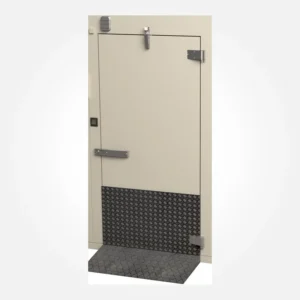 Holding room
Cold Room Storage917
Frozen product moves here once the core temperature is reached — blast capacity is too expensive to use for storage.
Holding room
Cold Room Storage917
Frozen product moves here once the core temperature is reached — blast capacity is too expensive to use for storage.
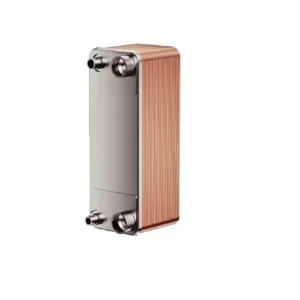 Defrost & controls
Refrigeration & Heat Exchange Parts670
Hot-gas defrost and termination controls: frosting is far heavier here than in a storage room.
Defrost & controls
Refrigeration & Heat Exchange Parts670
Hot-gas defrost and termination controls: frosting is far heavier here than in a storage room.
What to check before you order
- R404A Refrigerant 2,066
- Still the most serviceable option for low-temperature duty in most markets.
- Ammonia / R717 191
- The industrial answer where a machine room and qualified operators exist.
- CO2 / R744 315
- Increasingly specified for new low-temperature plant in regulated markets.
- 380V 15,604
- Three-phase supply — blast duty is well beyond single-phase capability.
- Stainless Steel 12,508
- Food-contact surfaces and heavy washdown.
Products for this application
-
- 110v~600v
- R134A
-
View & Inquire

-
- Material pu
-

- Material PVC
-
View & Inquire

-
- use without power
- Material PC
-
- Dc 24V
- R134A
- below 40dB
-

- 220-240V
- R-410A
-
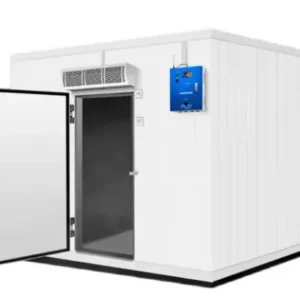
Refrigerator, 380V, TECUMSEH
$1,271.48- 380V
- Customzied Size
- R-404
-
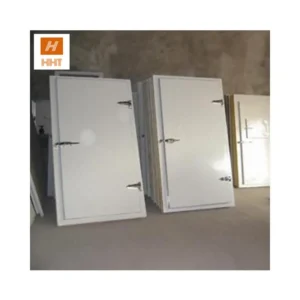
Freezer, r404, 50mm
$180.00- R404
-

- 380V
- R-410A
-
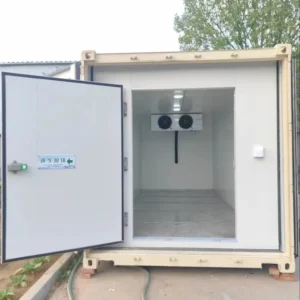
- 380 V
- R404A
Questions buyers ask
How is a blast freezer sized differently from a cold store?
Why does fast freezing matter for product quality?
Can I use my existing cold room for blast freezing?
Related applications
Tell us about your blast freezing rooms & equipment project
Send the duty and site conditions and we will come back with matched equipment, price and lead time from the manufacturers listed here — usually within one working day.