

Air handling for controlled environments, where the design driver is air change rate and pressure cascade rather than cooling load — and the fan has to hold its flow as filters load.
- 28,114products across this application
- 4,198verified manufacturers
- 6equipment groups
WhatClassified air, not a cooling load
A cleanroom is a space with a controlled airborne particle count, classified under ISO 14644, usually combined with tight temperature and humidity control and a deliberate pressure cascade between adjoining rooms. Air is supplied through terminal HEPA filters and recirculated at a rate set by the classification — which is far higher than any thermal calculation would suggest.
WhoWho buys cleanroom air handling
Pharmaceutical and biotech manufacturers, medical device makers, semiconductor and electronics assembly plants, food and cosmetics producers with hygiene classifications, specialist cleanroom construction companies, and the GMP validation consultants who sign the installation off.
WhereWhere the specification travels
Established pharmaceutical clusters and the newer manufacturing capacity being built in Asia, the Middle East and Eastern Europe. Regulatory requirements are broadly harmonised internationally, so specification travels well between markets — which is unusual in HVACR.
WhenConstruction, expansion and requalification
At facility construction, at expansion into a new product line with a different classification requirement, and at requalification, when a room no longer holds its classification and the air handling has to be upgraded to recover it.
WhyAir change rate drives everything
Cleanroom air handling is dominated by air change rate, not cooling load, and that changes the entire economics. An ISO 7 room needs roughly 30–60 air changes per hour and ISO 5 needs several times that, against perhaps 6–10 in a normal commercial building. Fan energy therefore dominates the operating cost. The consequence most often missed at procurement is that terminal HEPA filters gain resistance steadily as they load, so a fan selected only at clean-filter conditions will lose airflow over the filter's life and the room will drift out of classification long before anyone changes a filter.
HowHolding flow as filters load
Select fans with a flat pressure characteristic and EC or variable-speed drive under closed-loop control, so that flow is held constant as filter resistance rises rather than decaying with it. Design the pressure cascade explicitly, room by room, and make sure the supply and extract equipment can actually maintain those differentials while doors are used. Specify wipe-down surfaces — stainless steel, no exposed insulation, no particle-shedding materials — throughout the air path. And document performance at both clean and dirty filter conditions, because validation will ask for both.
Equipment this application needs
 Air handling units
Centrifugal Fans11,344
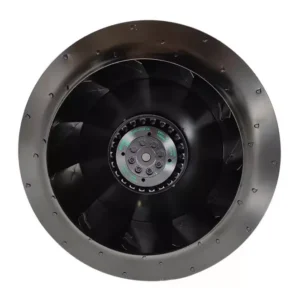
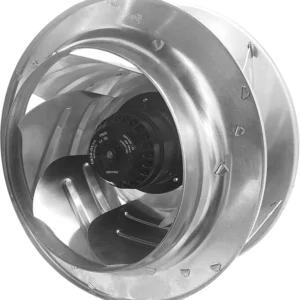
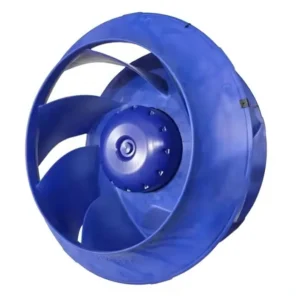
Plug fans with EC drives, holding constant volume as terminal filters load through their service life.
Extract & pressure control
Ventilation Fans25,793
Room extract that maintains the designed pressure differential between adjacent classifications.
Air handling units
Centrifugal Fans11,344
Plug fans with EC drives, holding constant volume as terminal filters load through their service life.
Extract & pressure control
Ventilation Fans25,793
Room extract that maintains the designed pressure differential between adjacent classifications.
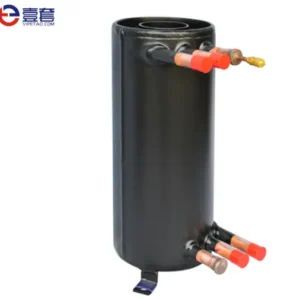 Temperature & humidity
Chilling Equipment939
Close temperature and humidity control, including the reheat capacity that dehumidification requires.
Temperature & humidity
Chilling Equipment939
Close temperature and humidity control, including the reheat capacity that dehumidification requires.
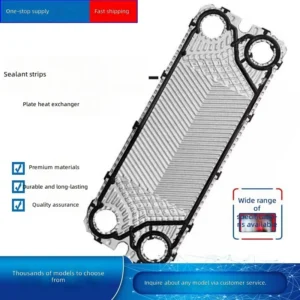 Energy recovery
Heat Exchangers364
Recovering energy from the large exhaust volumes a high air change rate produces, without cross-contamination.
Energy recovery
Heat Exchangers364
Recovering energy from the large exhaust volumes a high air change rate produces, without cross-contamination.
 Heat rejection
Dry Cooler348
Rejecting process and cooling load, with free cooling available for much of the year.
Heat rejection
Dry Cooler348
Rejecting process and cooling load, with free cooling available for much of the year.
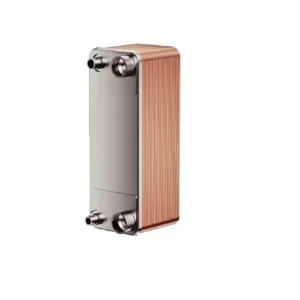 Controls & instrumentation
Refrigeration & Heat Exchange Parts670
Valves, sensors and controls — all of which have to be documented and calibrated for validation.
Controls & instrumentation
Refrigeration & Heat Exchange Parts670
Valves, sensors and controls — all of which have to be documented and calibrated for validation.
What to check before you order
- EC Motor 2,500
- Efficient, controllable, and able to hold constant volume under closed-loop control as resistance changes.
- Variable Speed 2,411
- The mechanism that keeps airflow constant as HEPA filters load.
- Stainless Steel 12,508
- Wipe-down, non-shedding surfaces throughout the air path.
- Low Noise 4,912
- Operators work inside these rooms for full shifts at very high air change rates.
- Energy Saving 5,353
- 30–60 air changes per hour, continuously, makes fan energy the dominant operating cost.
Products for this application
-

- 220V/110V
- 1000-2000 m3h
- 0.16 W
-
- 5V-500V
- Power Source Electric
- Carbon Steel
-
- Size 1175*575*320
- Material Textile
-

- 380 V
- Stainless Steel
- 2800 rpm
-
- Customized Size
- 220V/50Hz
- Material SUS304
-

- 230 V
- Blade Material Plastic
-
View & Inquire
-

- 135W
- Air Flow 1100CMH
- Material Galvalume
-
- 380 V
- Aluminum Alloy
- 1350RPM
-
- 400V
- Stainless Steel
-
- Material Fiberglass
-

- 220V 50Hz 0.75KW
- 1000-2000 M3h
Questions buyers ask
How many air changes per hour does a cleanroom need?
Why must cleanroom fans have variable speed control?
What is a pressure cascade and what does it require from the equipment?
Specific setups within this application
Related applications
Tell us about your cleanroom & pharmaceutical hvac project
Send the duty and site conditions and we will come back with matched equipment, price and lead time from the manufacturers listed here — usually within one working day.