
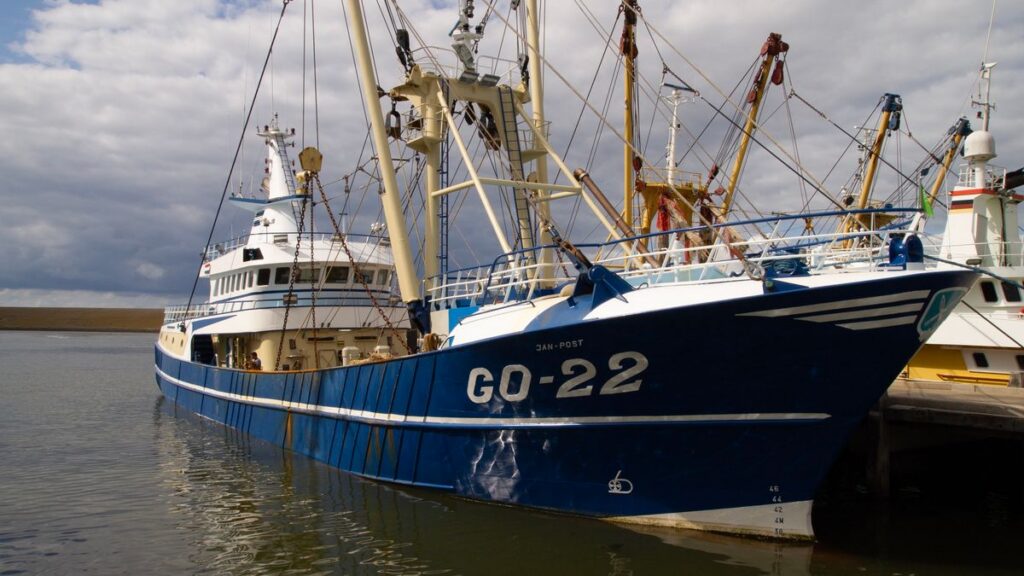
Refrigeration that has to freeze the catch where it is landed, on a moving deck, powered by the vessel and exposed to salt every hour it operates.
- 3,329products across this application
- 896verified manufacturers
- 5equipment groups
WhatChilling at sea, not in port
A fishing vessel has to bring the catch down to holding temperature immediately, because quality is decided in the first hours after landing on deck. Systems fall into two families: refrigerated sea water, which chills catch rapidly in tanks and suits pelagic species landed in bulk, and plate or blast freezing in the hold for vessels that stay out long enough to freeze rather than chill.
WhoWho buys it
Fishing fleet owners and skippers, refit and repair yards, marine refrigeration installers, and equipment dealers serving fishing ports.
WhyWhy the environment is the whole problem
The thermodynamics are ordinary; the conditions are not. Salt-laden air corrodes coils and enclosures faster than any land installation, continuous vibration and hull flexing fatigue rigid pipework and destroy bearings rated for static duty, and the electrical supply is the vessel’s own generator, whose voltage and frequency wander as the load changes. Equipment designed for a shoreside cold store fails on all three counts.
HowSpecifying for a working boat
Start with corrosion: coated coils, non-ferrous or marine-grade hardware, sealed enclosures. Handle vibration with anti-vibration mounts and flexible connections at every rigid termination — this is the difference between a refrigerant leak in the first season and a system that lasts. Match the electrical supply as it actually is, including generator behaviour under load. And design for service at sea by one person with hand tools, because that is who will be fixing it.
Equipment this application needs
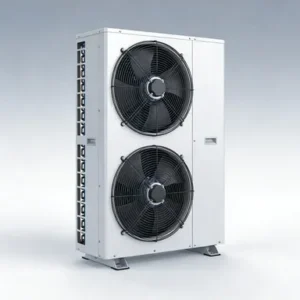 RSW & hold packs
Condensing Units825
Marine-protected packs, often seawater-cooled, mounted on anti-vibration bases.
RSW & hold packs
Condensing Units825
Marine-protected packs, often seawater-cooled, mounted on anti-vibration bases.
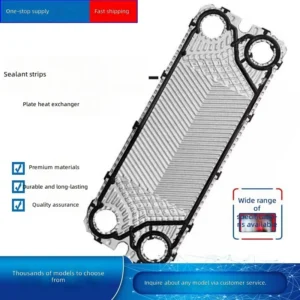 Seawater cooling
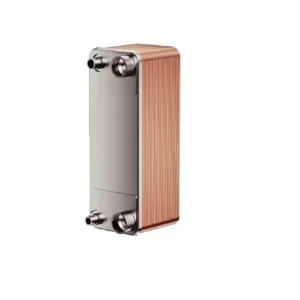
Heat Exchangers364
Titanium or cupro-nickel — stainless plates pit and fail in flowing seawater.
Seawater cooling
Heat Exchangers364
Titanium or cupro-nickel — stainless plates pit and fail in flowing seawater.
 Hold & tank cooling
Evaporators792
Coated coils that survive salt exposure and take hull vibration without fatiguing.
Hold & tank cooling
Evaporators792
Coated coils that survive salt exposure and take hull vibration without fatiguing.
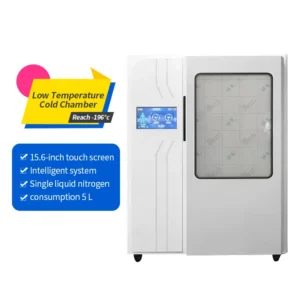 Plate & blast freezing
Freezing Equipment678
Freezing at sea for vessels on longer trips — quality is decided in the first hours.
Plate & blast freezing
Freezing Equipment678
Freezing at sea for vessels on longer trips — quality is decided in the first hours.
 Onboard spares
Refrigeration & Heat Exchange Parts670
Valves, seals and controls carried aboard; a failure at sea cannot wait for a delivery.
Onboard spares
Refrigeration & Heat Exchange Parts670
Valves, seals and controls carried aboard; a failure at sea cannot wait for a delivery.
What to check before you order
- Corrosion Resistant 2,232
- Continuous salt exposure with no shelter. Not an upgrade in this scenario.
- Stainless Steel 12,508
- Grade 316 for exposed hardware; 304 corrodes within a season at sea.
- 24V DC 812
- Vessel supply — native DC avoids putting an inverter in the reliability chain.
- IP55 / IP68 3,348
- Sealed against spray, washdown and green water on deck.
- R404A Refrigerant 2,066
- Serviceable in fishing ports worldwide, which matters more at sea than efficiency.
Products for this application
-

- Power Source Electric
- Material plastic
-
View & Inquire
-
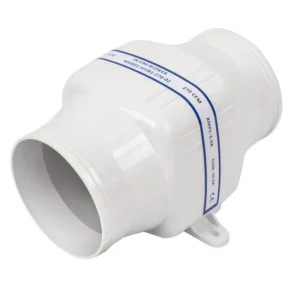
- 270CFM
- Power Electric
-
- 270CFM
- Power Electric
-

- Blade Material Plastic
- 3000RPM
-
View & Inquire
-

- 12V DC
- Power Source Electric
- Blade Material Plastic
-
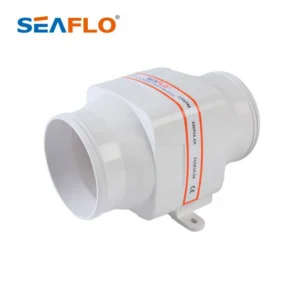
- 12 V
- Blade Material Plastic
-

- 120 V
- 200mm-2000mm
- Power Source Electric
-

- 12V DC 24V DC
- 45*31*35cm
-
View & Inquire

-
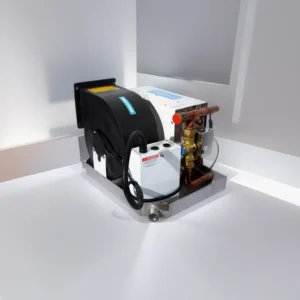
- 36000BTU
- 220V 60HZ
Questions buyers ask
RSW or plate freezing for a fishing vessel?
Why is seawater heat exchanger material so important?
Can shoreside refrigeration equipment be marinised?
Related applications
Tell us about your fishing vessel refrigeration project
Send the duty and site conditions and we will come back with matched equipment, price and lead time from the manufacturers listed here — usually within one working day.