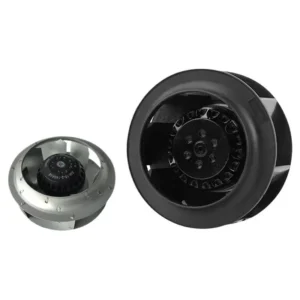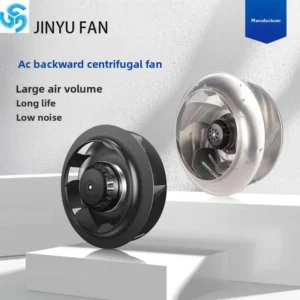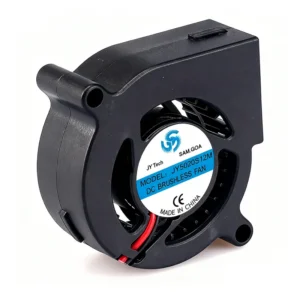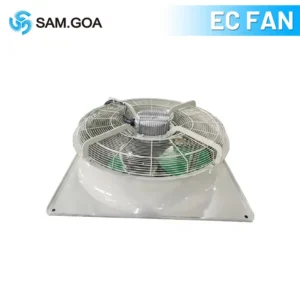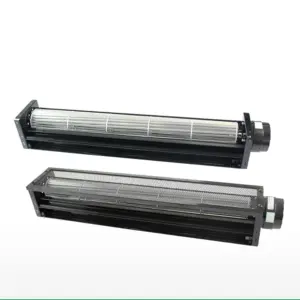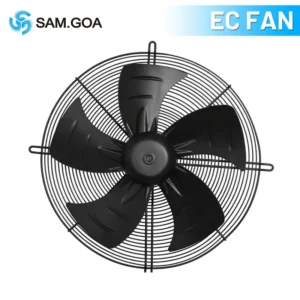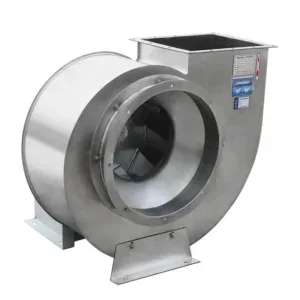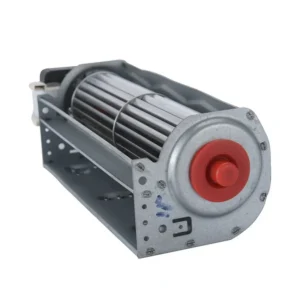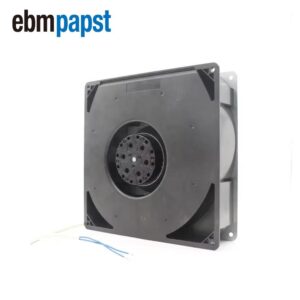
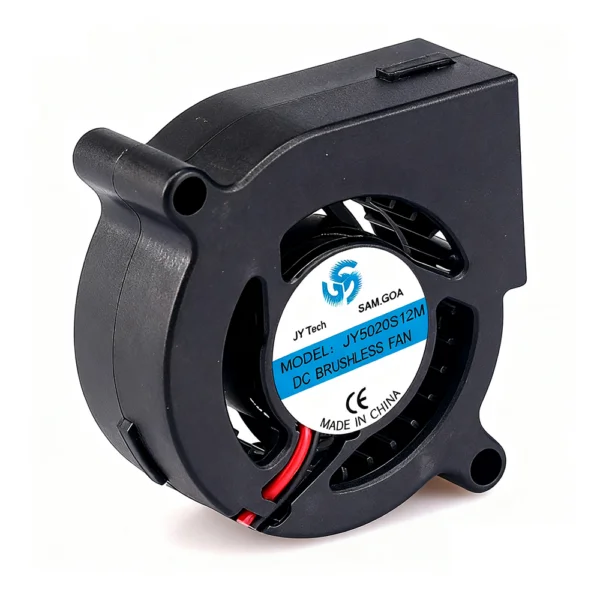
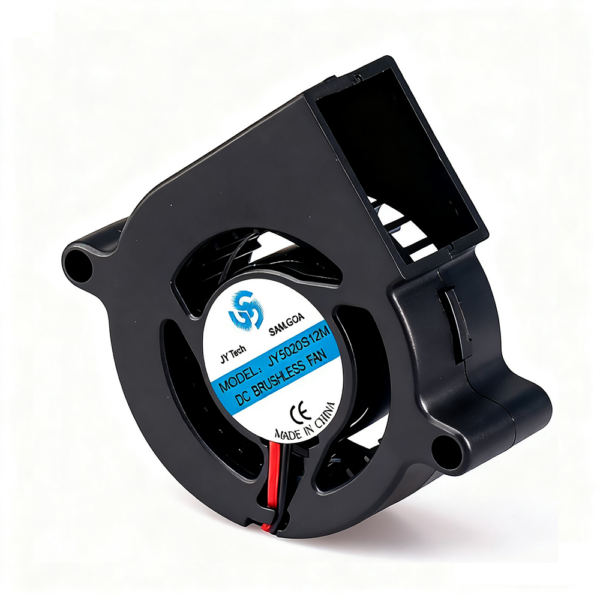
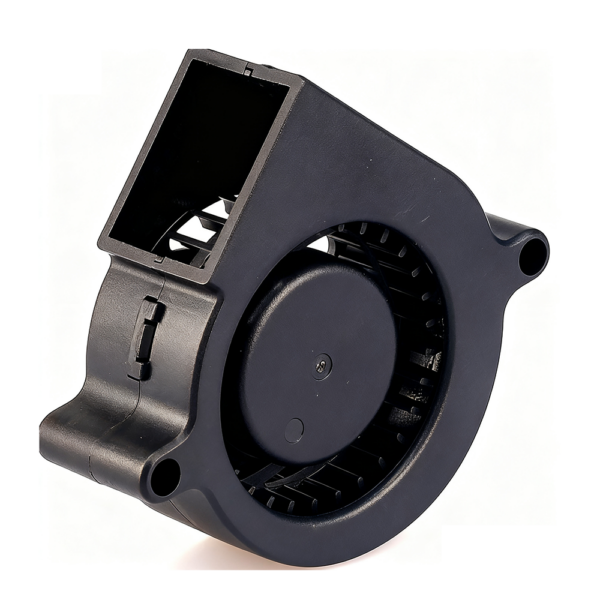
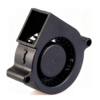

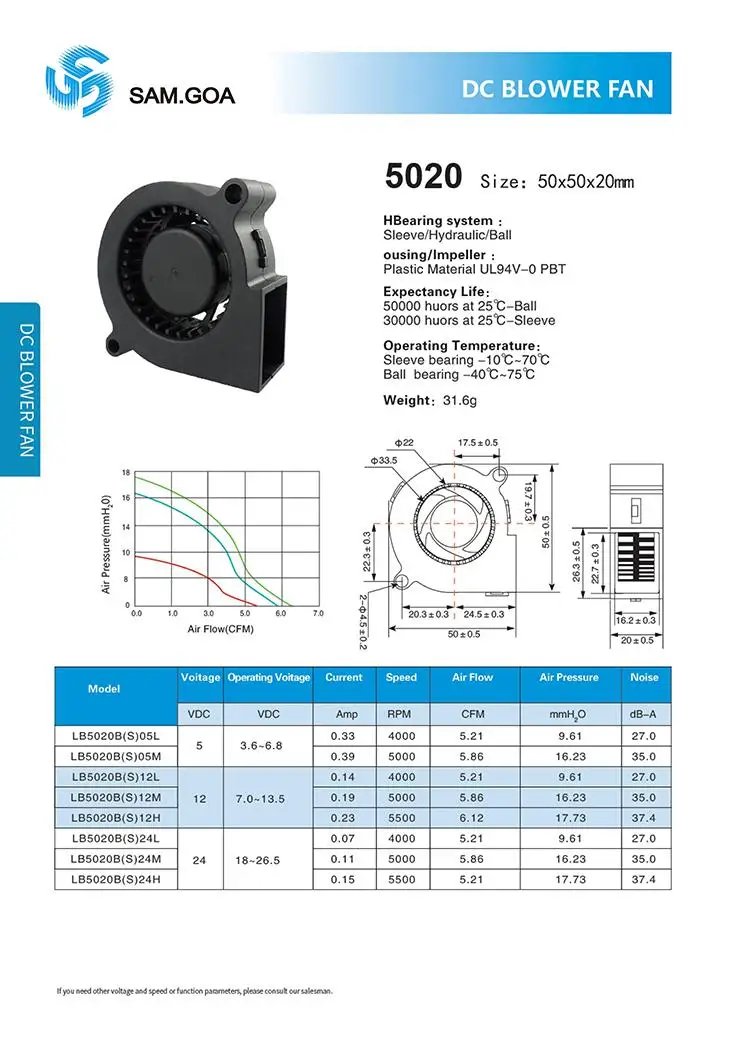
The dc centrifugal blower listed here carries 12 V, 5 V, DC 24v, power source Electric, documented exactly as the manufacturer publishes it. Quantity and destination market determine the final price — tell us both for a firm quote.
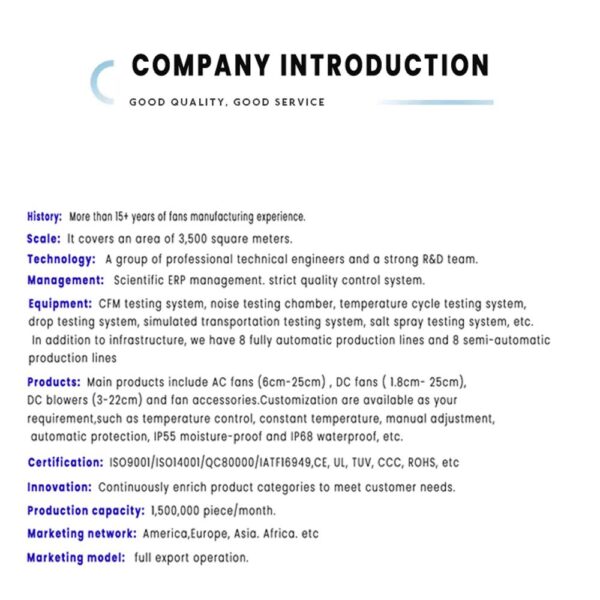
IP68 is the specification that separates this DC centrifugal blower from the rest of the 5020 field — it survives immersion, not just splashes, which opens up outdoor equipment, marine electronics and wash-down machinery where a standard blower would corrode within weeks. CE and TUV certification is already in place for European import. PBT housing on ball bearings, 3500-5500RPM in 5V, 12V and 24V with OEM and ODM configuration.
Key Features of This Dc Centrifugal Blower
- Power Source: Electric
- Voltage: 12 V, 5 V, DC 24v
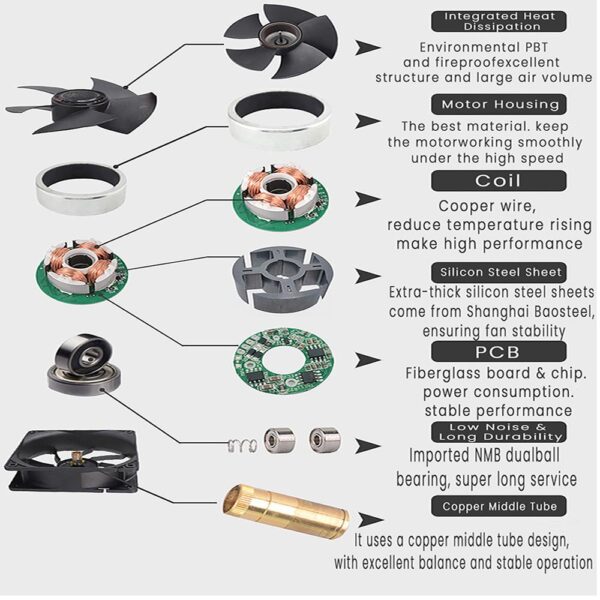
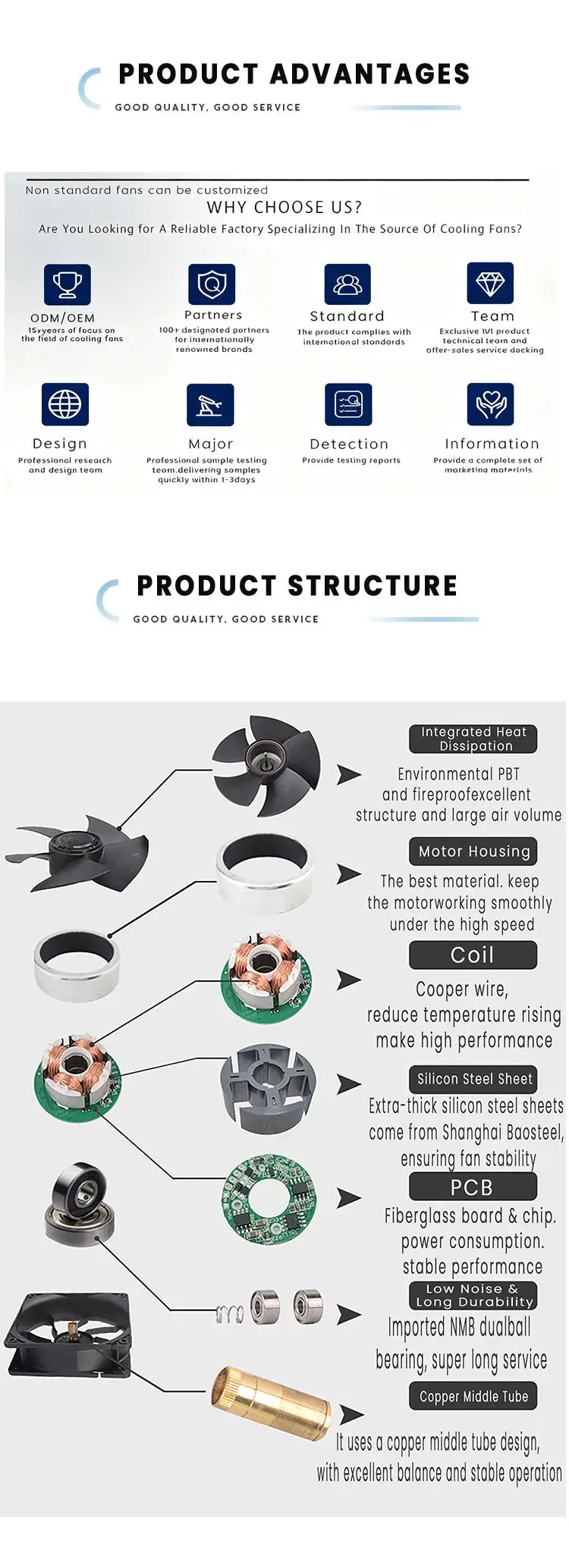
- Material: PBT
- Blade Material: Plastic
- Speed: 4500 RPM, 5500, 3500
- Warranty: 1 Year
Technical Specifications
| Voltage | 12 V, 5 V, DC 24v |
|---|---|
| Material | PBT |
| Speed | 4500 RPM, 5500, 3500 |
| Mounting Type | Duct Fan |
| Type | Duct Axial Fan |
| Warranty | 1 Year |
| Power Source | Electric |
| Blade Material | Plastic |
| Bearing Type | Ball Bearing |
| Customized Support | OEM, ODM |
| After-Sales Service Provided | Video Technical Support |
| Place Of Origin | Zhejiang, China |
| Selling Units | Single item |
This product has acquired the relevant product qualification(s)/license(s) of certain applicable country/countries.View more
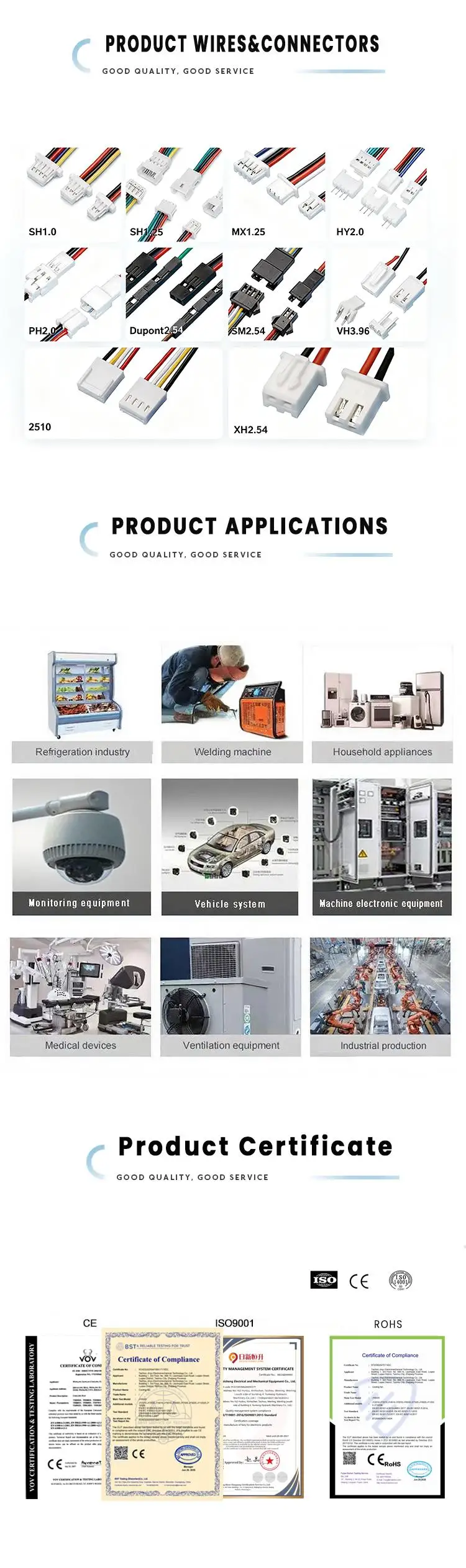
The 5020 blower fan, as a compact DC cooling device, finds extensive applications across electronic equipment, industrial machinery, and new energy sectors, specifically as follows:
I. Electronic Equipment Cooling
Computer Hardware: Used for cooling power adapters and server power supplies, maintaining stable temperatures through intake or exhaust modes.
Projectors and Printers: The wide-mouth design of 5020 blowers enables efficient heat dissipation. Select models support PWM speed control to accommodate varying load demands.
Security Equipment: Continuous cooling is essential for devices like DVRs and switches to prevent overheating and system crashes.
II. Industrial Machinery and Automation
Frequency Converters and Motors: 5020 fans are commonly used for cooling frequency converters, welding machines, and similar equipment. Some industrial models support 24V high-voltage environments.
Laser Cutters and 3D Printers: High-heat-generating equipment relies on their high airflow characteristics for localized cooling.
III. New Energy and Energy Storage
New Energy Vehicles: Used for cooling battery packs and motors; some models feature waterproof designs for harsh environments.
Energy Storage Systems: Such as converters and inverters, requiring fan-assisted cooling to enhance energy efficiency.
IV. Home Appliances & Consumer Electronics
Air Purifiers & Humidifiers: Low-noise 5020 fans suit household devices; oil-bearing models extend lifespan 38.
Beauty Devices & Hair Removal Instruments: Centrifugal blowers ensure internal cooling for safe operation 35.
V. Special Applications
Medical Equipment: Brushless models meet cleanliness standards for instrument cooling
Outdoor Equipment: Industrial fans with dustproof and waterproof designs for applications like charging stations and LED displays.
Selecting the 5020 blower requires consideration of voltage (3V-24V), airflow volume, and noise requirements. Different applications have specific demands for bearing types (oil-impregnated/ball) and structures (axial/centrifugal).
Frequently Asked Questions
What is the minimum order quantity for this dc centrifugal blower?
Minimum order quantity is set per configuration and trial quantities can usually be arranged. Send your target volume with an enquiry and a quotation will follow with current lead times.
What warranty covers this dc centrifugal blower?
A 1 Year warranty is supplied as standard. Spare parts and technical support remain available beyond the warranty period.
Can it be built for my local voltage?
The standard specification is 12 V, 5 V, DC 24v. Alternative voltage and frequency builds are available when confirmed at order stage.
Do you accept OEM or custom branding?
Yes. Custom logo, colour, packaging and specification changes are accepted on qualifying volumes. Supply your artwork and technical requirements with the enquiry.
How long is production and delivery?
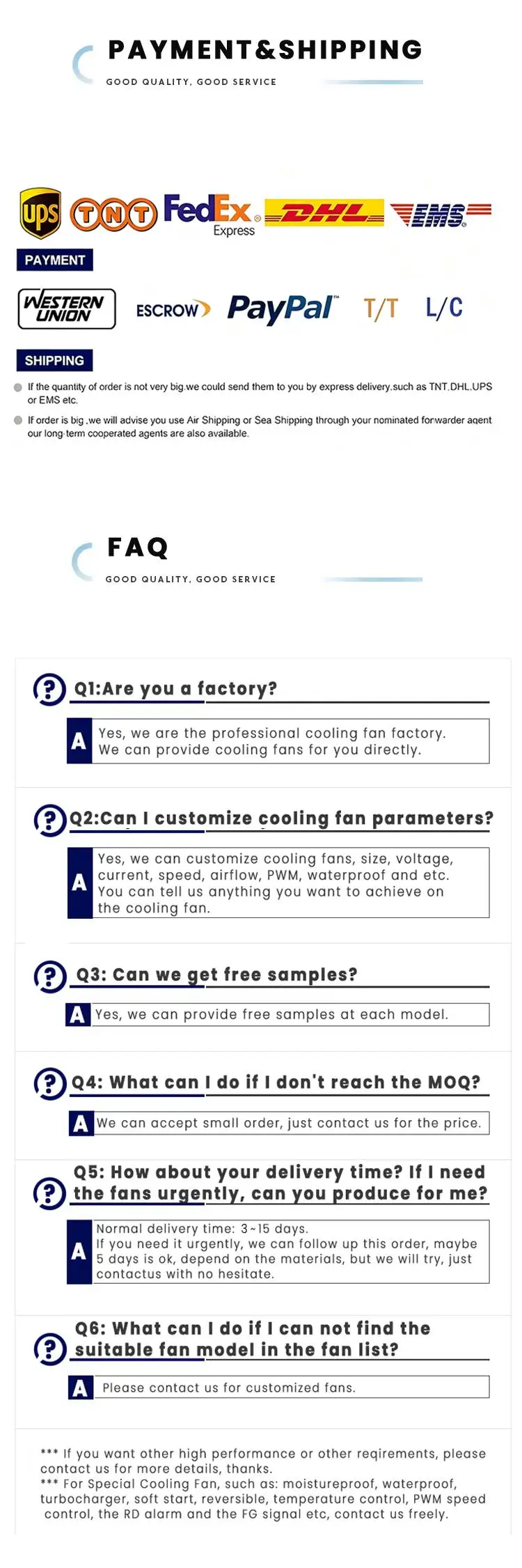
Stocked configurations normally ship in 7-15 days. Customised or high-volume orders are typically produced in 25-35 days, confirmed at order.
About the Manufacturer
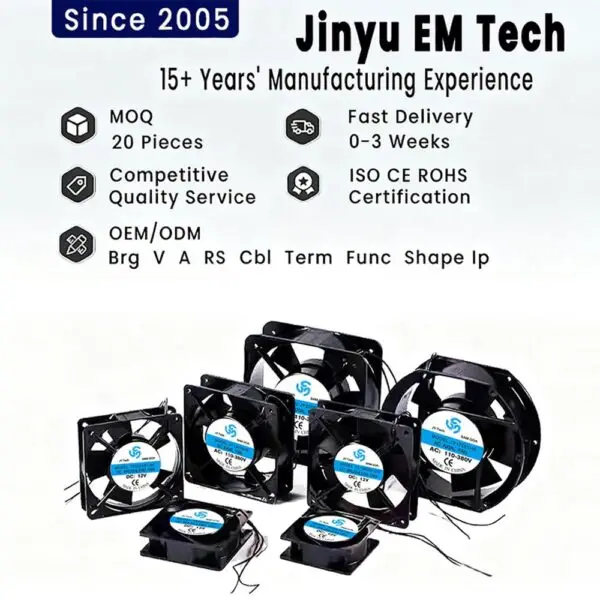
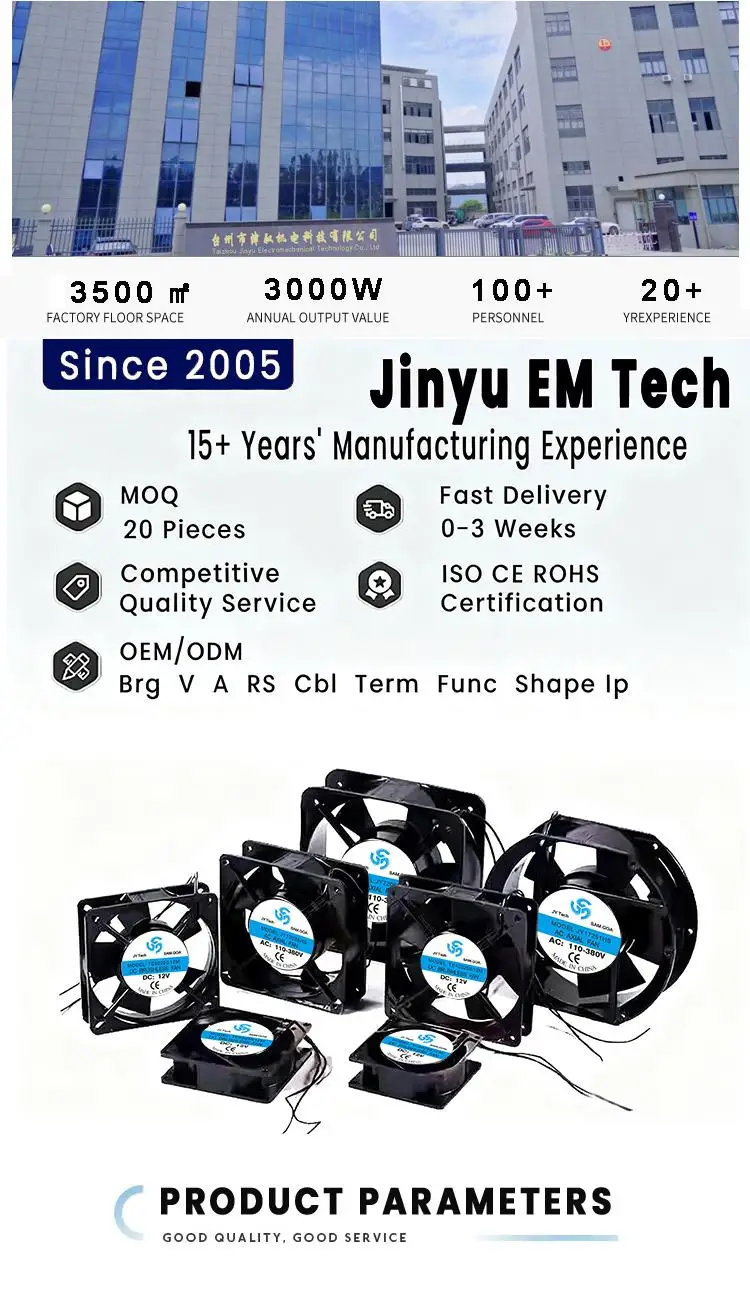
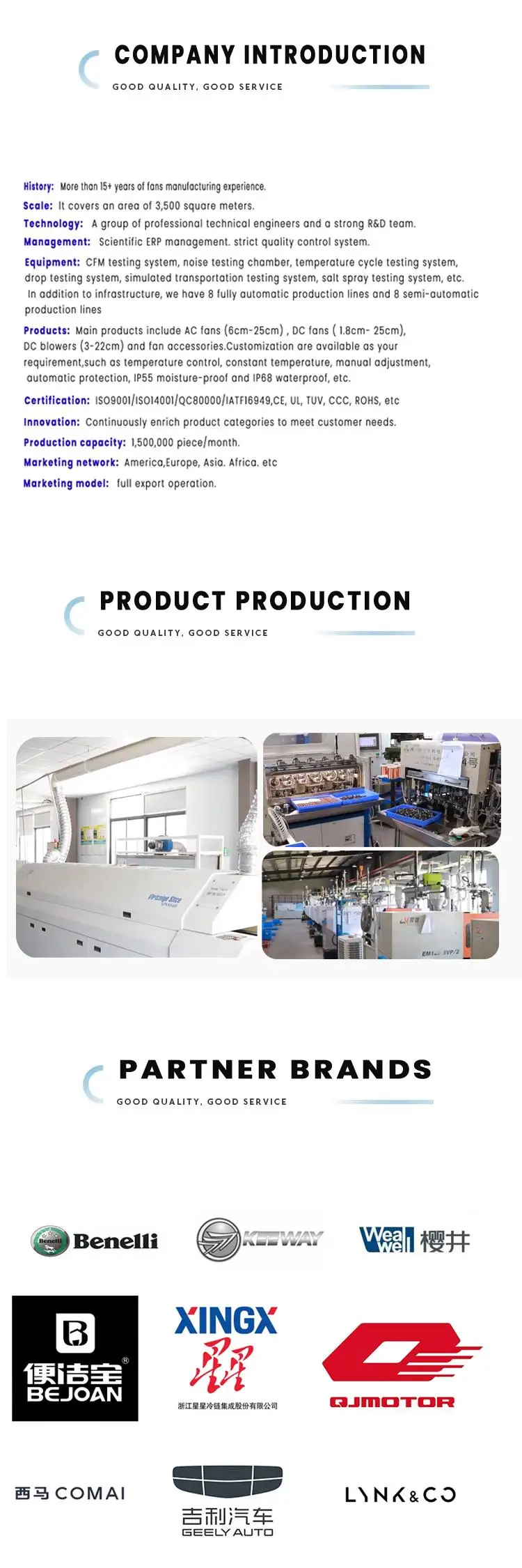
This dc centrifugal blower is produced by Taizhou Jinyu Electromechanical Technology Co., Ltd.. Browse the full Taizhou Jinyu Electromechanical Technology Co., Ltd. range on HVACR Nexus.
See more in Blowers on HVACR Nexus.