

Racks that draw 30 kW and above break the assumptions air-cooled halls were built on — the air simply cannot carry the heat away fast enough.
- 13,665products across this application
- 2,324verified manufacturers
- 5equipment groups
WhatWhere conventional air cooling runs out
A hall designed around 5–8 kW per rack works because the room acts as a buffer. At 30 kW and above that stops being true: the air volume needed to carry the heat away becomes impractical to move through a rack, hot spots form regardless of containment, and cooling has to be brought physically closer to the load — close-coupled to the row, the rack, or ultimately the chip.
WhoWho buys it
Operators deploying AI training and inference clusters, HPC facilities, colocation providers retrofitting high-density suites into existing halls, and the M&E contractors delivering them.
WhyWhy density changes the whole design
Two things break at once. First, air: the mass flow required through a 30 kW rack is beyond what conventional perforated-tile delivery can supply, so containment alone no longer solves it. Second, water temperature: high-density deployments generally return warmer water, which is actually an advantage — it makes free cooling viable for far more hours than a conventional hall achieves, provided the heat rejection plant was sized for it.
HowBringing cooling to the load
Move heat rejection closer to the rack — in-row or rear-door heat exchangers cut the air path from tens of metres to centimetres. Design the water loop around the warmer return temperatures density produces, and size dry coolers to exploit that: the same equipment that struggles at 12 °C return free-cools comfortably at 30 °C. Keep redundancy at the row rather than the hall, because a failure now affects a much larger load concentrated in a smaller space.
Equipment this application needs
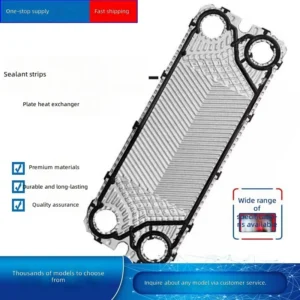 Close-coupled & rear-door
Heat Exchangers364
Bringing the water within centimetres of the load — the practical answer above 30 kW per rack.
Close-coupled & rear-door
Heat Exchangers364
Bringing the water within centimetres of the load — the practical answer above 30 kW per rack.
 Warm-water heat rejection
Dry Cooler348
Higher return temperatures make free cooling viable for far more hours than a conventional hall.
Warm-water heat rejection
Dry Cooler348
Higher return temperatures make free cooling viable for far more hours than a conventional hall.
 High-static air handling
Centrifugal Fans11,344
EC plug fans developing the pressure that dense rack airflow requires.
High-static air handling
Centrifugal Fans11,344
EC plug fans developing the pressure that dense rack airflow requires.
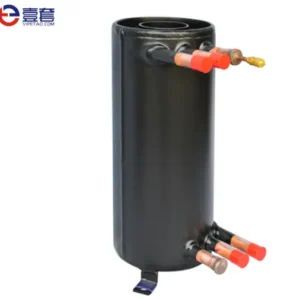 Trim cooling
Chilling Equipment939
Covering the hours ambient cannot, at a much reduced run time.
Trim cooling
Chilling Equipment939
Covering the hours ambient cannot, at a much reduced run time.
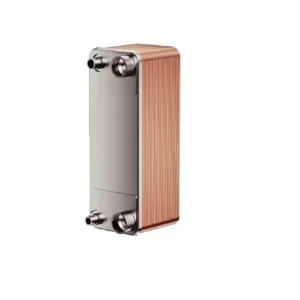 Valves, sensors & controls
Refrigeration & Heat Exchange Parts670
Flow balancing and leak detection close to live IT equipment.
Valves, sensors & controls
Refrigeration & Heat Exchange Parts670
Flow balancing and leak detection close to live IT equipment.
What to check before you order
- EC Motor 2,500
- High-static duty at continuously varying load.
- Variable Speed 2,411
- Flow follows rack load rather than running at design flow permanently.
- Energy Saving 5,353
- At this density, cooling energy is a material share of total facility power.
- Stainless Steel 12,508
- Water circuits running close to live electronics — material quality is a risk control.
- Low Noise 4,912
- High-static fan arrays are the loudest equipment in the hall.
Products for this application
-
View & Inquire

-
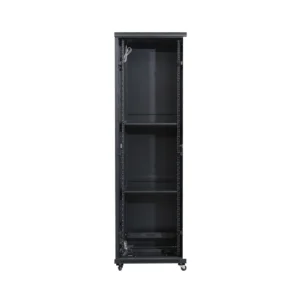
- Capacity 42u
- 600MM*600MM
- Material SPCC
-
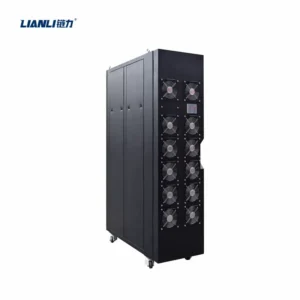
- 600*1350*2200mm
-
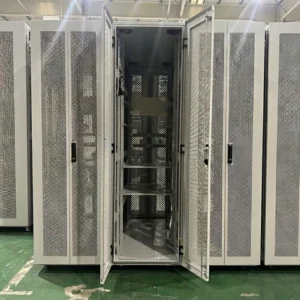
- Size 800*600*2000
-

- Size 800*600*2260
-
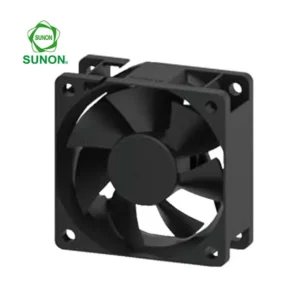
- 12V
- Blade Material Plastic
-
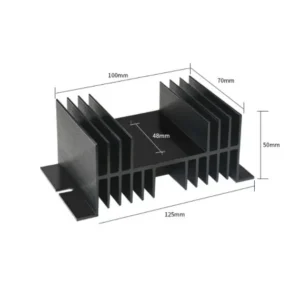
- Material copper
-
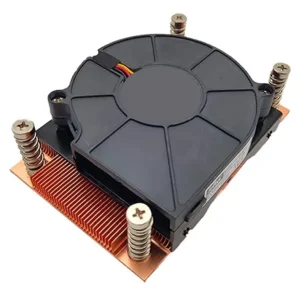
- 10.37cfm
- 2.3W
- Noise 54.8dba
-
View & Inquire
-
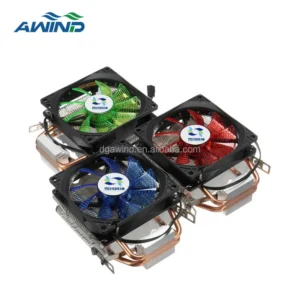
- 92*60*125mm
-
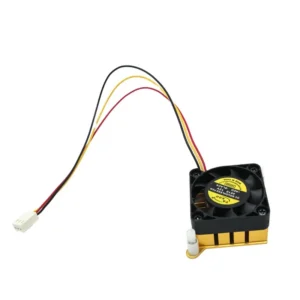
- 40x40x23mm
- Material Aluminum
-
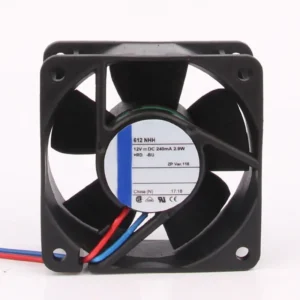
- 12 v
- 60X60X25MM
- 2.9W
Questions buyers ask
At what rack density does air cooling stop working?
Does high density make free cooling harder?
Where should redundancy sit in a high-density deployment?
Related applications
Tell us about your high-density & ai rack cooling project
Send the duty and site conditions and we will come back with matched equipment, price and lead time from the manufacturers listed here — usually within one working day.