
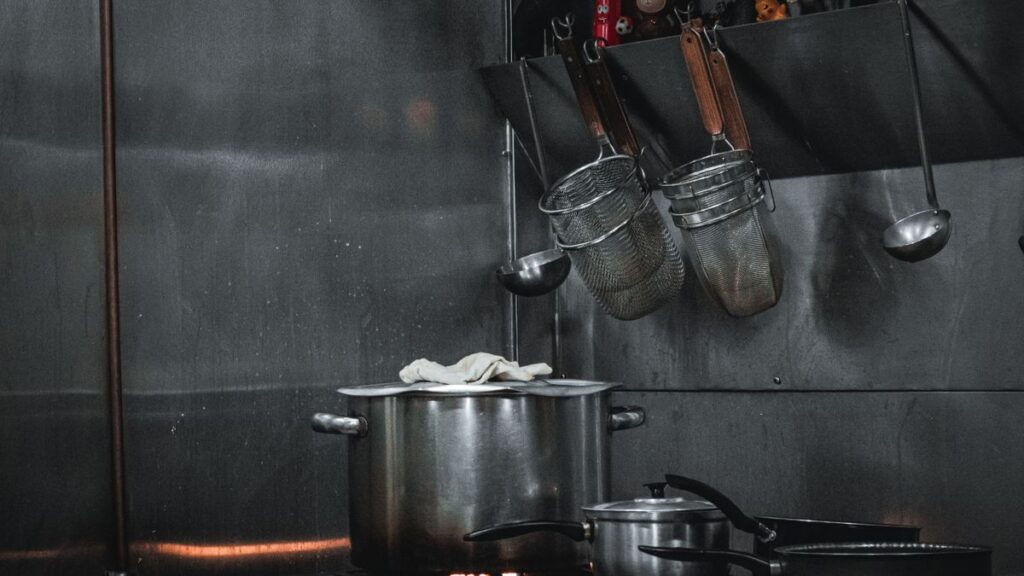
Several independent cooking lines packed into one building with no dining room to protect — and usually neighbours who never expected a commercial kitchen next door.
- 19,574products across this application
- 2,484verified manufacturers
- 5equipment groups
WhatMany kitchens, one building
A cloud kitchen facility subdivides a shell into several small independent cooking units, each with its own hood, sharing a building envelope, an electrical supply and usually a discharge route. There is no dining room, so the classic problem of smoke drifting into a restaurant disappears — and is replaced by two harder ones: shared discharge and neighbours.
WhoWho buys it
Cloud kitchen operators and landlords fitting out multi-unit facilities, delivery-first restaurant brands, and the M&E contractors converting industrial or retail units into food production space.
WhyWhy discharge is the binding constraint
These facilities usually occupy converted buildings in mixed-use areas, and the combined extract of six or eight cooking lines discharging in one place produces both odour and noise at a scale the neighbourhood never had before. Planning conditions on odour and night-time noise are commonly what determine whether a site is viable at all — more often than the cooking equipment or the kitchen layout.
HowDesigning shared systems that stay independent
Give each unit its own hood and fan so tenants can operate on independent hours and one tenant’s failure does not close the building; combine only at the discharge point. Size make-up air for the whole building rather than per unit, since units rarely peak together. Budget for odour treatment from the outset — carbon or UV added later, into ductwork not designed for the pressure drop, is far more expensive than designing it in. And check the acoustic limit at the boundary before committing to the site.
Equipment this application needs
 Per-unit hood extract
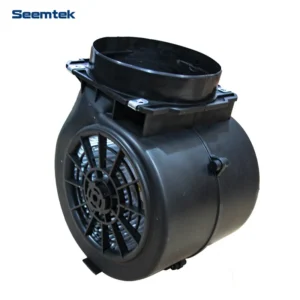
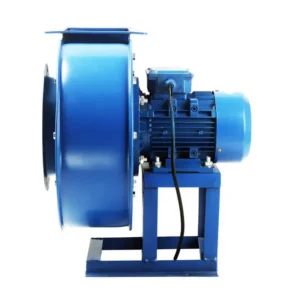
Centrifugal Fans11,344
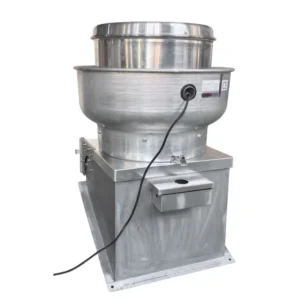
One fan per kitchen so tenants stay independent; combined only at discharge.
Per-unit hood extract
Centrifugal Fans11,344
One fan per kitchen so tenants stay independent; combined only at discharge.
 Building make-up air
Axial Flow Fans6,332
Sized for the whole facility — units rarely all peak at once.
Building make-up air
Axial Flow Fans6,332
Sized for the whole facility — units rarely all peak at once.
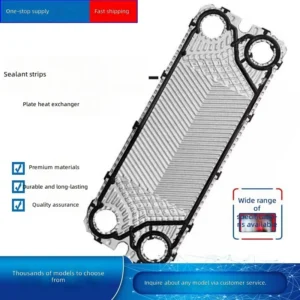 Make-up air tempering
Heat Exchangers364
Heating replacement air for several kitchens is the dominant running cost.
Make-up air tempering
Heat Exchangers364
Heating replacement air for several kitchens is the dominant running cost.
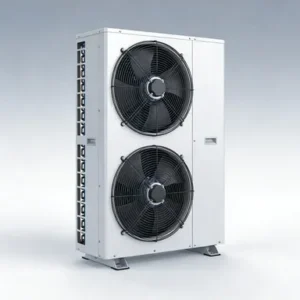 Shared cold rooms
Condensing Units825
Compact packs for per-tenant chilled and frozen storage.
Shared cold rooms
Condensing Units825
Compact packs for per-tenant chilled and frozen storage.
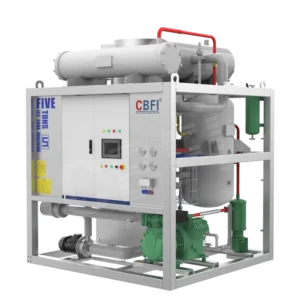 Beverage & prep ice
Ice Machines709
Shared facility ice production sized on combined peak.
Beverage & prep ice
Ice Machines709
Shared facility ice production sized on combined peak.
What to check before you order
- High Temperature 2,144
- Continuous duty in hot, grease-laden extract.
- Low Noise 4,912
- Usually the binding planning constraint at these sites.
- Stainless Steel 12,508
- Grade 304 minimum in the grease stream, cleanable repeatedly.
- Variable Speed 2,411
- Lets each unit follow its own service hours instead of running flat out.
- 380V 15,604
- Three-phase for a multi-unit facility.
Products for this application
-

- 220 V
- Stainless Steel
- 43 dB
-

- 220V/380V
- Stainless Steel
- 1400-2000rpm
-

- Blade Material FRP
-
- 230v
- Power Source Electric
- Material Plastic
-
- 110 V
- Power Source Electric
- Blade Material Plastic
-

- 950 m³/h
- 1900 rpm
-

- AC 220V~240V
- Blade Material Plastic
- 1650rpm
-
- 220 V
- 220v 750w
- Galvanized sheet
-
- 220V-240V
- 4" to 12"
- Power Source Electric
-

- 24 V
- Power Source Solar
- Blade Material Plastic
-

- 220 V
- 220v 750w
- Galvanized sheet
-
- Power Source Electric
- Aluminum Alloy
- 1400RPM/1720RPM
Questions buyers ask
Should each kitchen unit have its own extract fan?
Is odour control necessary in a delivery-only kitchen?
How is make-up air sized for a multi-unit facility?
Related applications
Tell us about your cloud & dark kitchen ventilation project
Send the duty and site conditions and we will come back with matched equipment, price and lead time from the manufacturers listed here — usually within one working day.