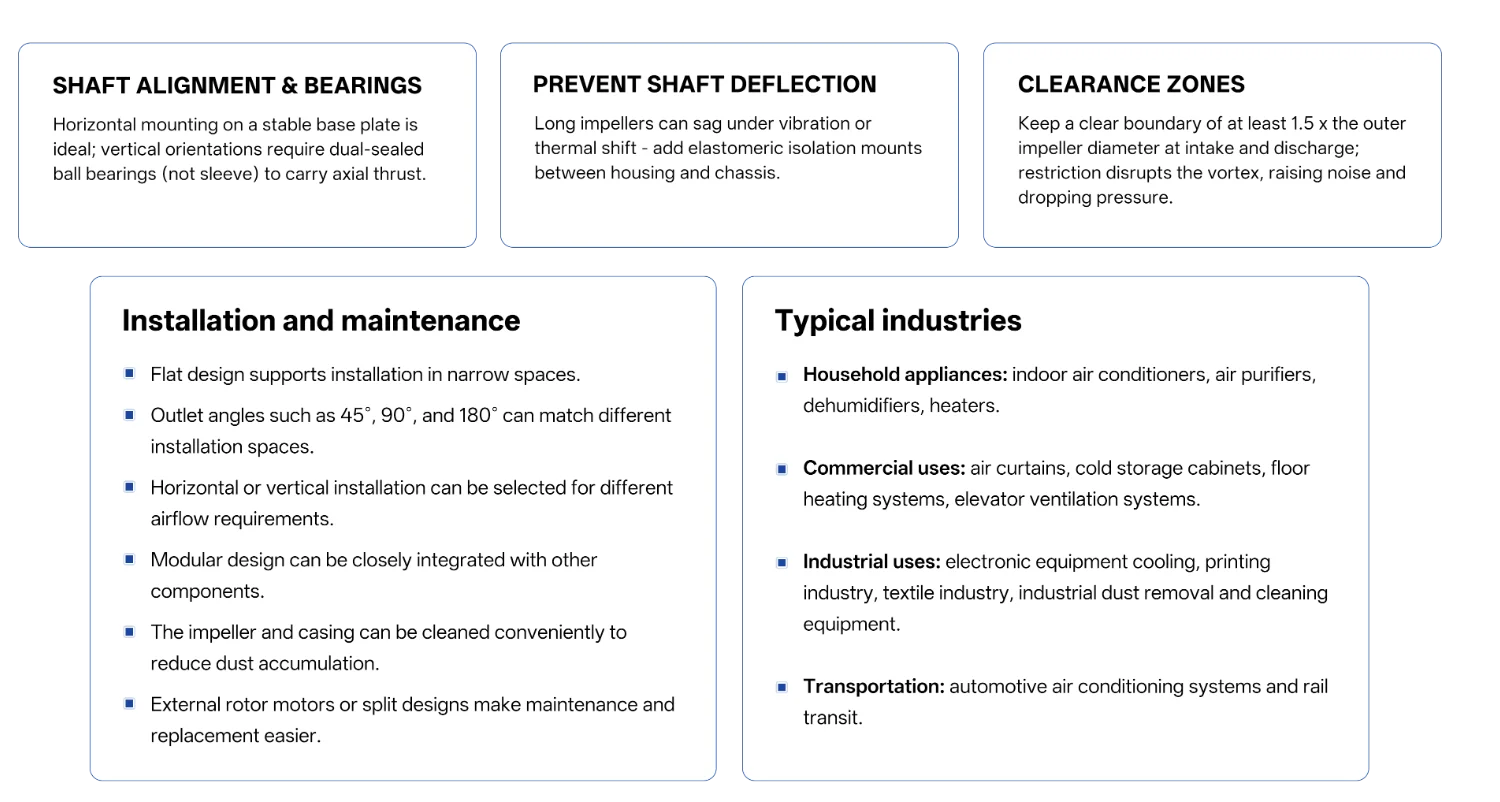
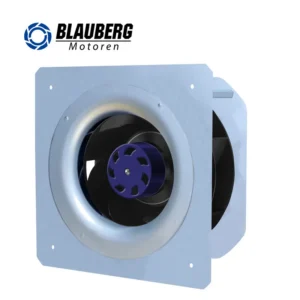
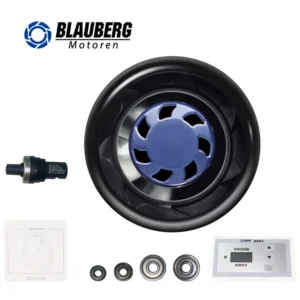
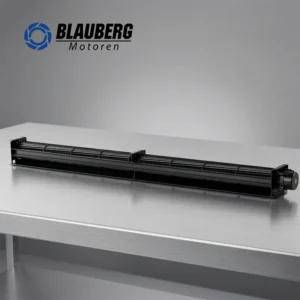
Cross Flow Fan. Key specification: 12V, blade material Aluminum Alloy. Ships factory-direct with the manufacturer’s data sheet. Model Number: CD12-F030A-EC-00(98). Certifications: ISO certified.
Cross flow fan — 12V, blade material Aluminum Alloy. The complete factory specification follows. Made by Suzhou Blauberg Motoren Technology Co., Ltd. (6 years on the platform, factory-assessed). For a binding price and lead time, send the volume you need and where it ships to.
Key Features of This Cross Flow Fan
Model Number: CD12-F030A-EC-00(98)
Voltage: 12V
Blade Material: Aluminum Alloy
Material: Aluminum Alloy
Certifications: ISO certified
Place Of Origin: none
Technical Specifications
Voltage
12V
Mounting
Free Standing
Blade Material
Aluminum Alloy
Material
Aluminum Alloy
Customized Support
OEM,ODM
After-Sales Service Provided
Online support
Place Of Origin
none
Brand Name
blauberg
Model Number
CD12-F030A-EC-00(98)
Color
black,silver
Product Name
DC Cross Flow Fan
Model
CD12-F030A-EC-00
Brand
Blauberg
Motor Type
Brushless Motor
Length
198mm
Features
Low noise, energy-saving, long service life
Applications
Cooling systems, display cabinets, printers, HVAC equipment, air circu
Customization
OEM/ODM available
Certifications
ISO certified
Selling Units
Single item
Single Package Size
65X65X60 cm
Single Gross Weight
6.500 kg
Product Details
PRODUCT INTRODUCTION
CROSS FLOW FAN:
the complete guide to types, specs & applications
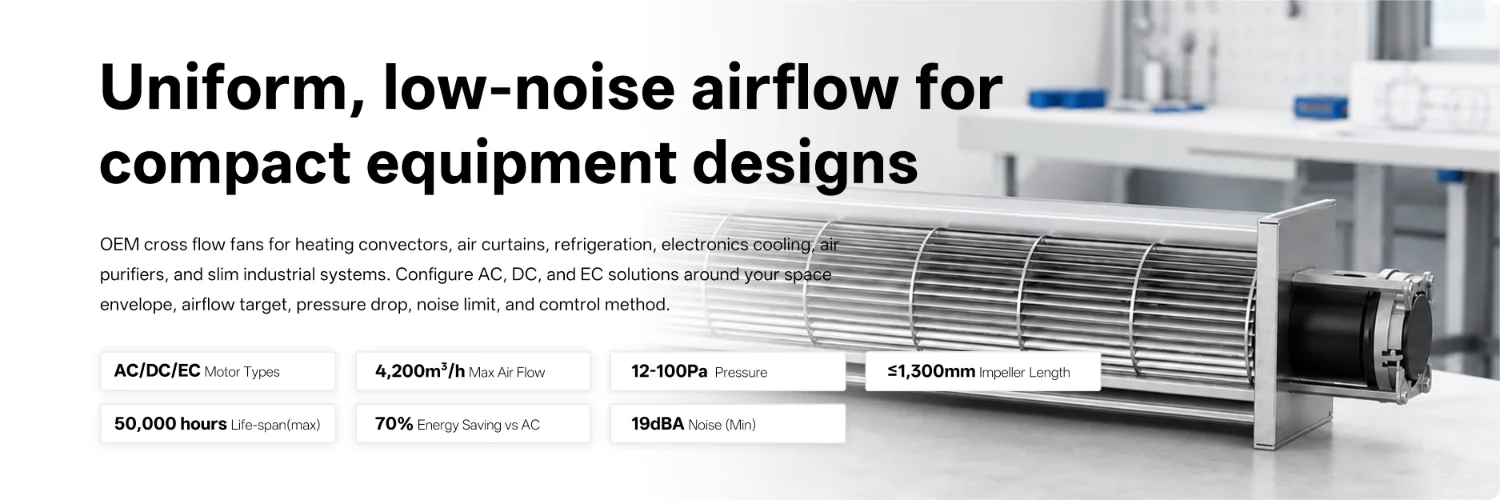
Everything engineers and procurement teams need to know about cross flow fans (tangential fans) – from working principles and key specifications to application-specific selection.
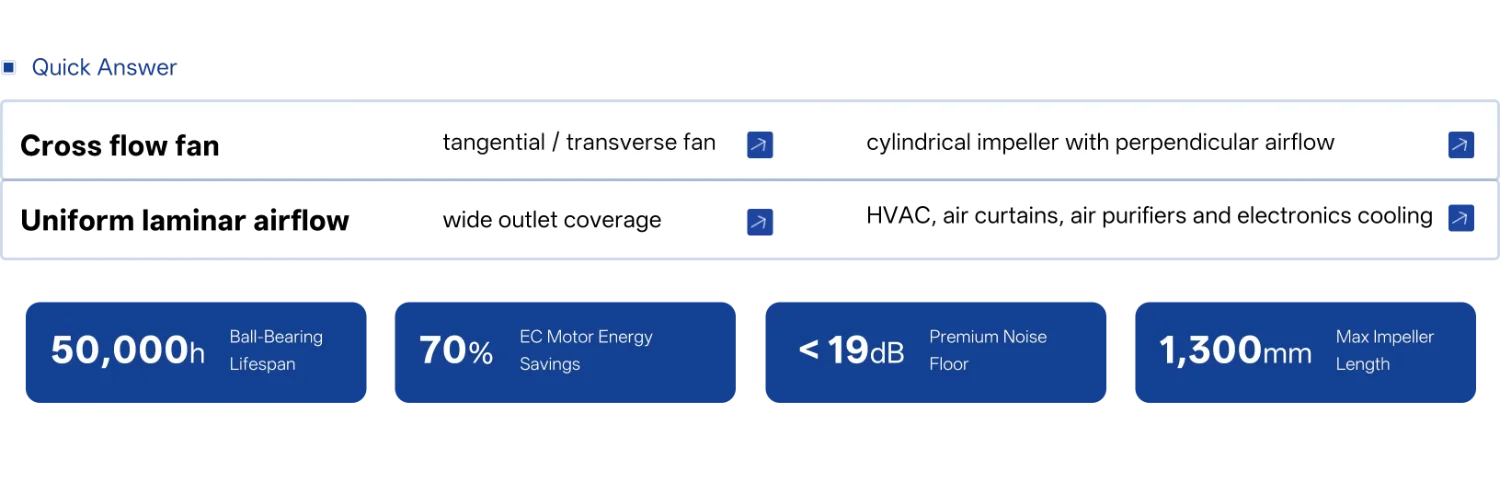
A cross flow fan — also referred to as a tangential fan, transverse fan, or cross flow blower — is a fan type characterized by its long, cylindrical impeller fitted with multiple forward-curved blades. Unlike axial fans(which move air parallel to the shaft) or centrifugal fans (which discharge air radially outward), the cross flow fan draws air in from one side of the impeller and expels it from the opposite side — all within the same plane and perpendicular to the rotation axia.
Viewed from the side, the impeller resembles an elongated hamster wheel or a manual lawn mower reel. This geometry enables the fan to generate a wide, fat, uniform stream of air across the entire length of its outlet — a characteristic no other fan type can replicate in a slim form factor.
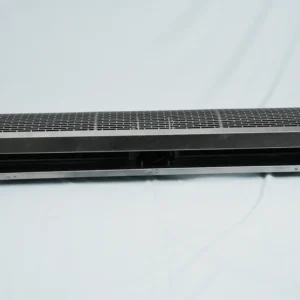
In practical terms: If you need to push a consistent sheet of air across a long, narrow opening — like the vent of a split-type air conditioner, an air curtain doorway, or a flat-panel heater — the cross flow fan is uniquely suited to do the job quietly and efficiently.
SELECT BY MOTOR AND CONTROL METHOD,
NOT ONLY BY SHAPE
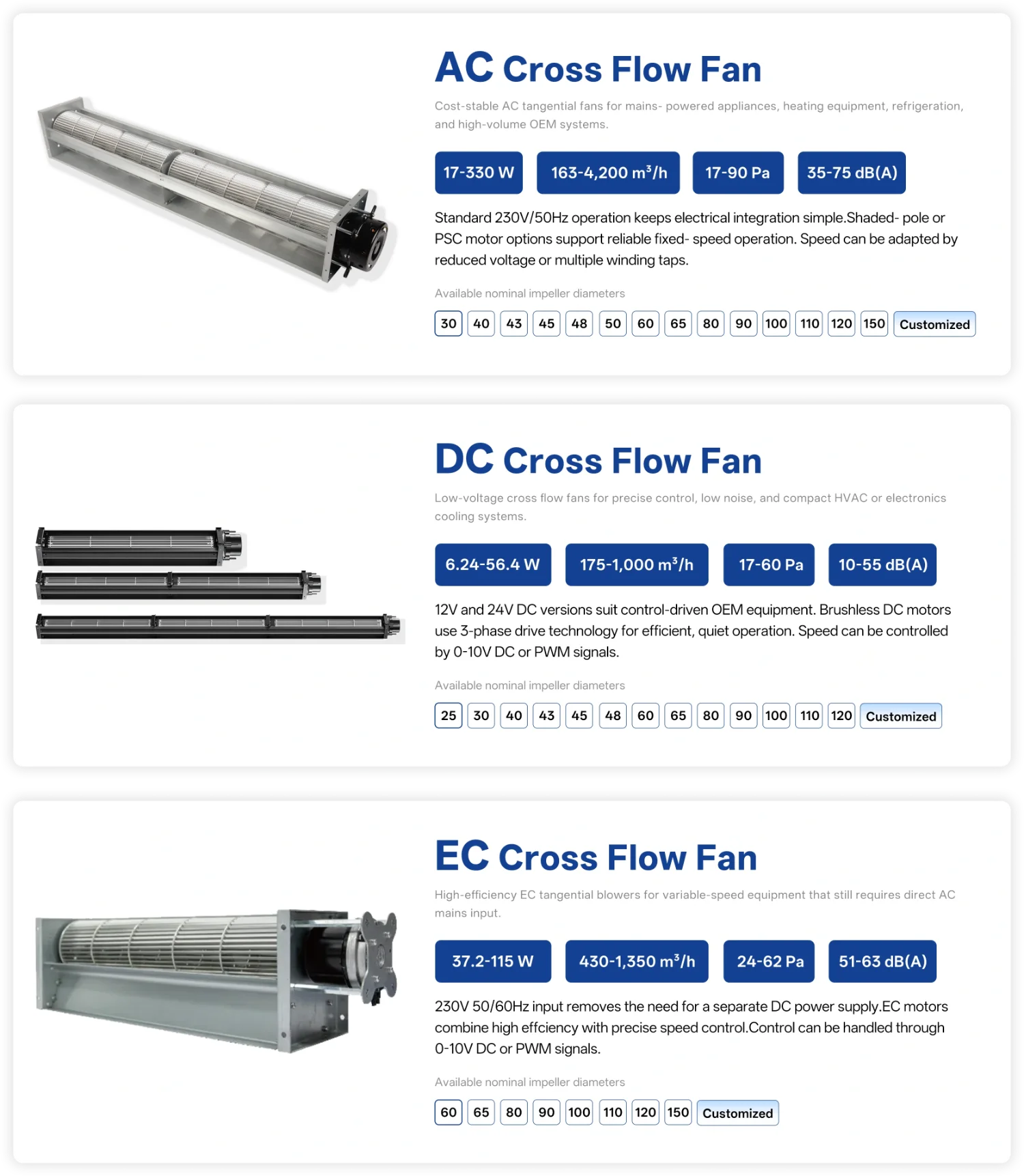
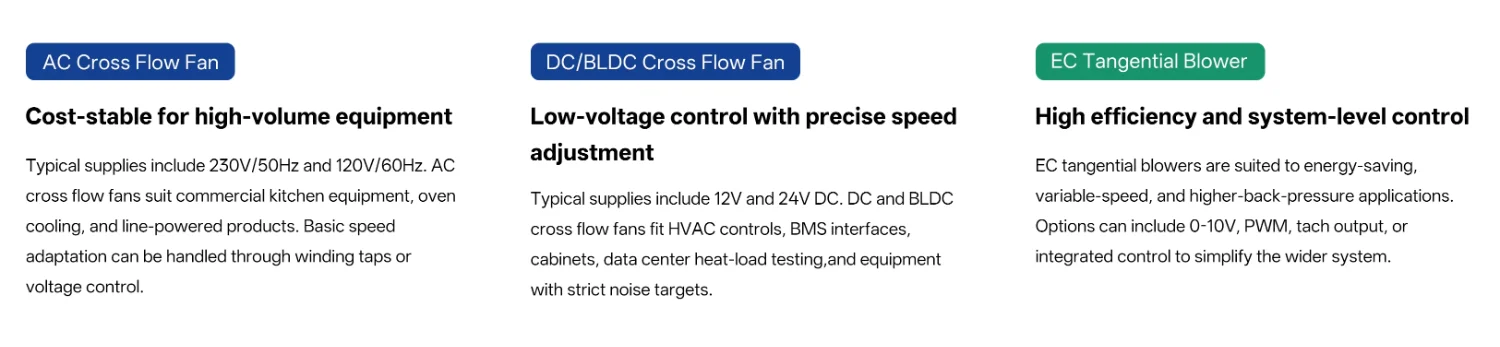
Putting AC, DC, and EC options on the same page reduces back-and-forth and turns vague price requests into engineering inquiries: voltage, airflow, control method, and application constraints.
标题
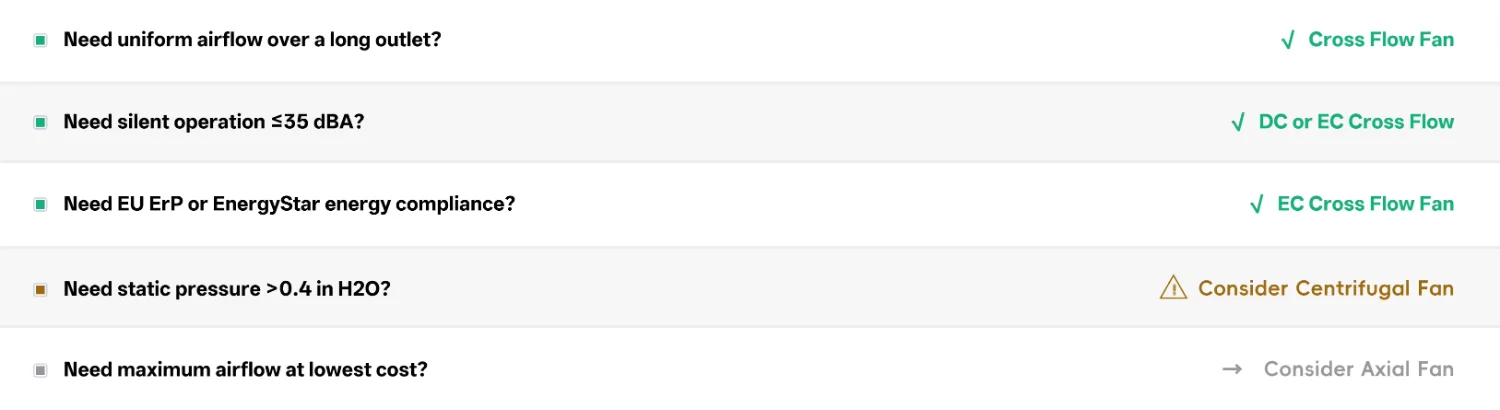
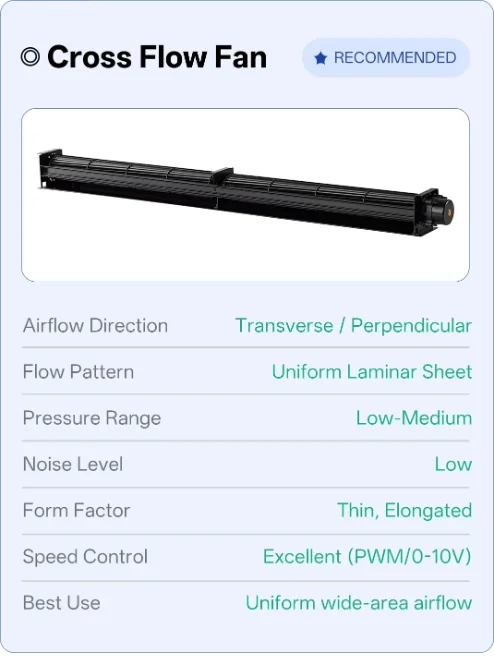
Cross flow fans occupy a unique and largely irreplaceable niche: uniform, laminar, wide-area airflow from a thin, elongated package. Use this decision matrix to quickly confirm your choice:
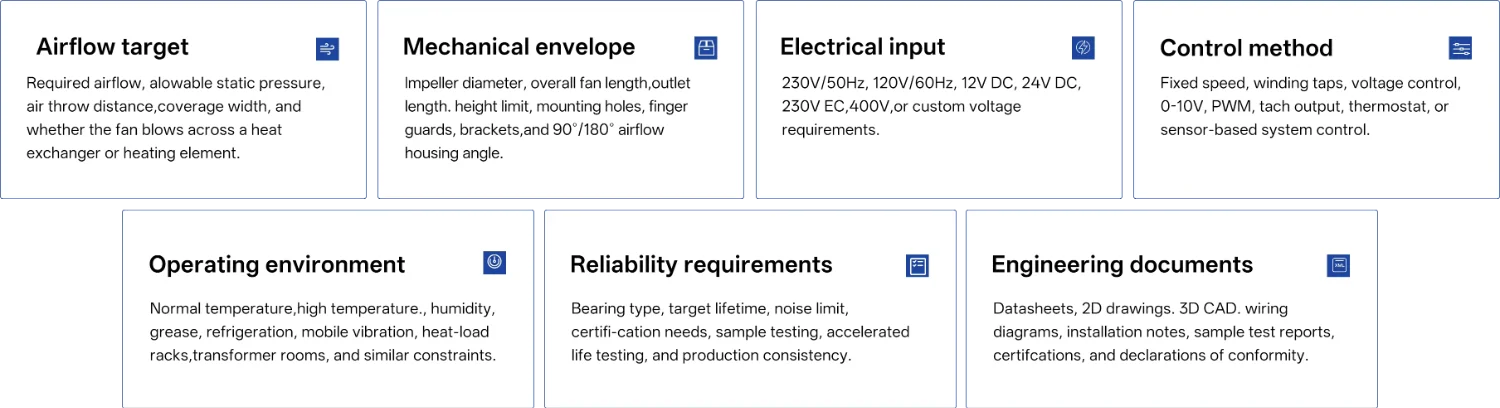
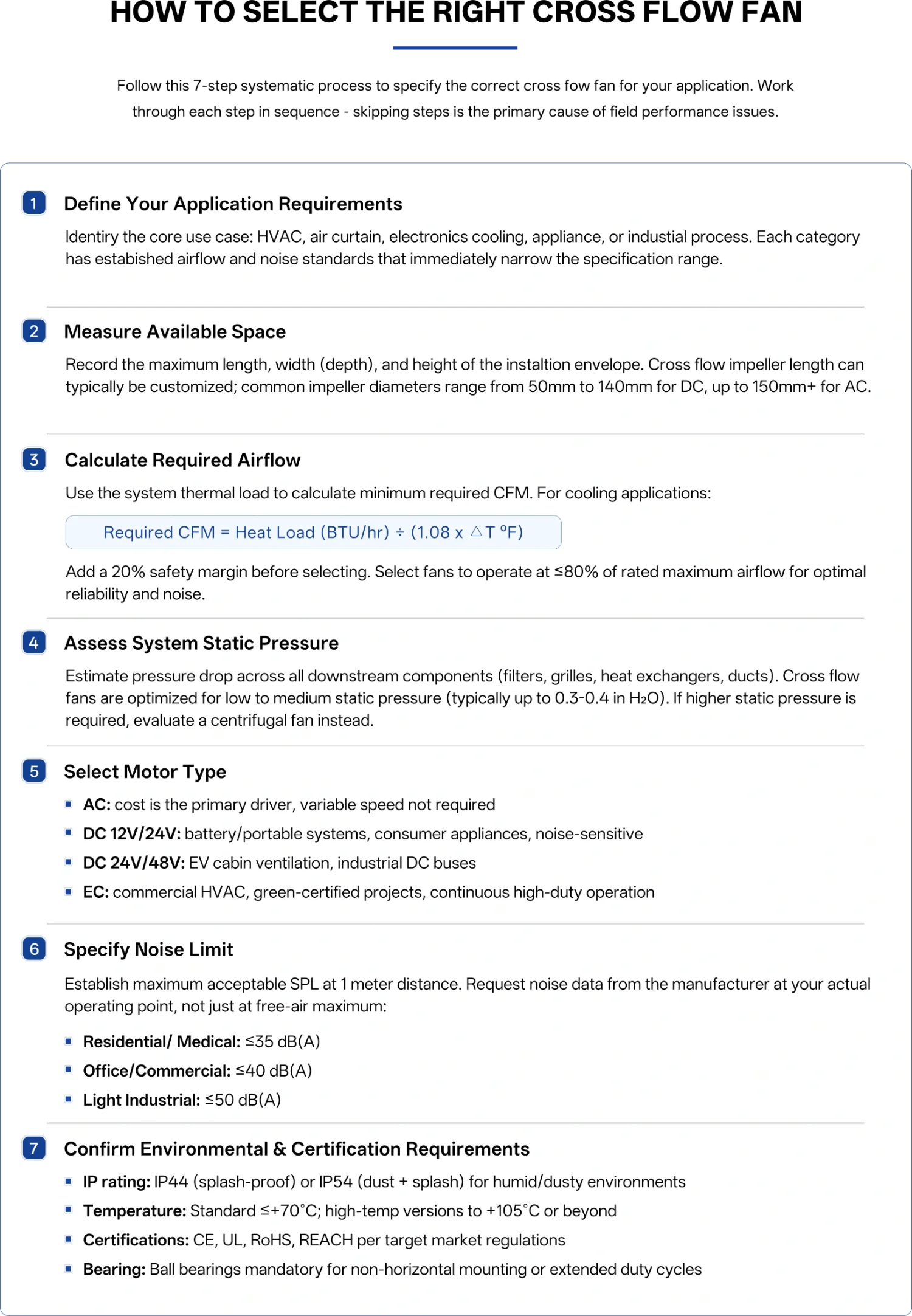
SELECTION DATA TO COLLECT BEFORE QUOTING
A checklist converts better than a generic contact button. It shows engineers that you understand their constraints and helps them provide useful data in one pass.
TECHNICAL SPECIFICATIONS
CROSS FLOW FAN MODELS & SPECIFICATIONS
Browse the Blauberg cross flow fan range by motor type, voltage, airflow, pressure, noise level, and installation dimensions.
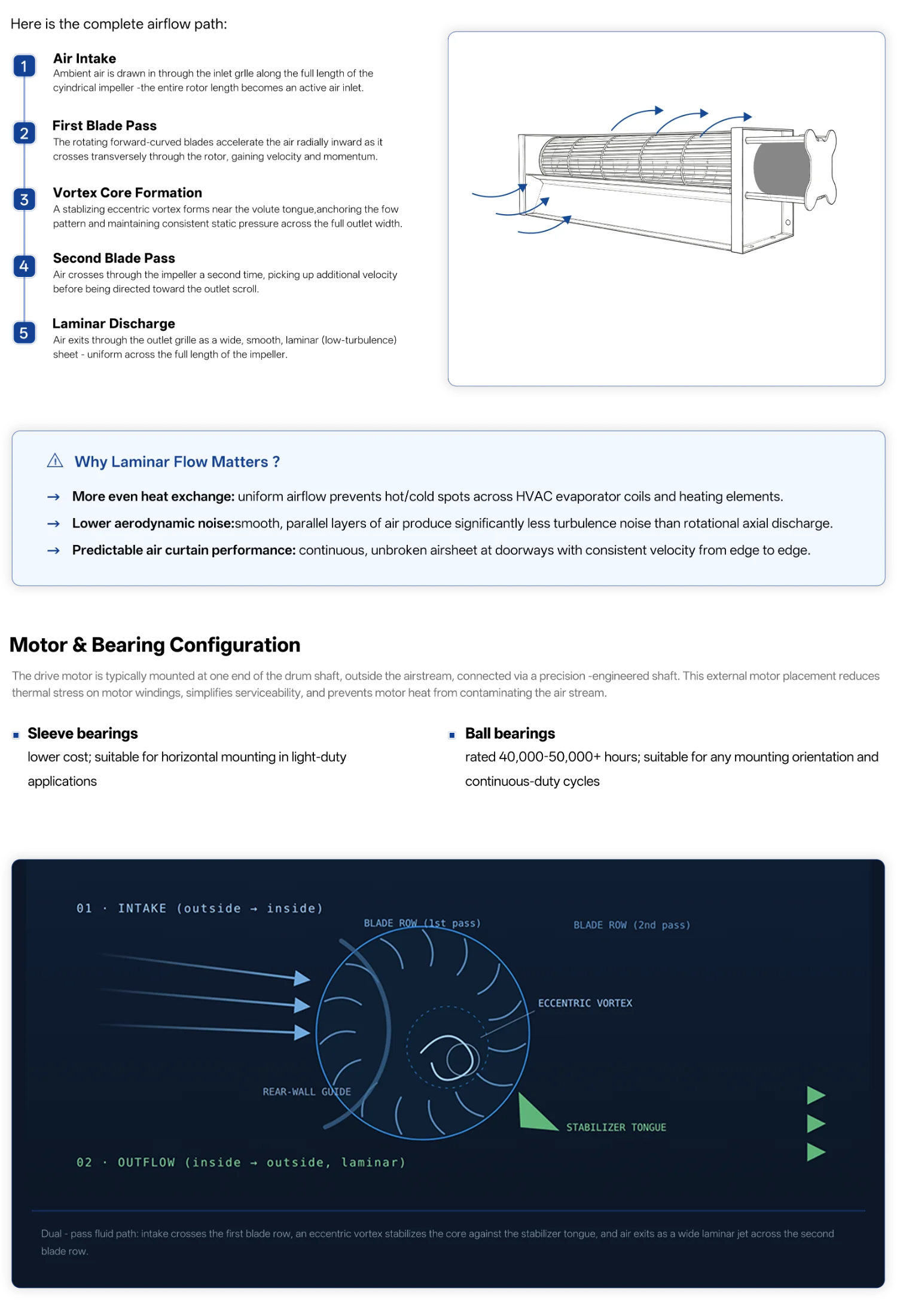
HOW DOES A CROSS FLOW FAN WORK?
The defining characteristic of a cross flow fans that air passes through the impeller twice once as it enters through the open face of the rotor and again as it exits through the opposite side into the outlet scroll (volute).
APPLICATIONS
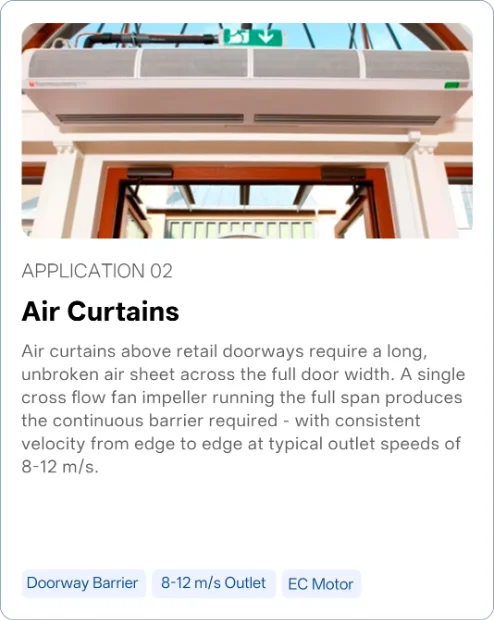
TOP APPLICATIONS OF CROSS FLOW FAN
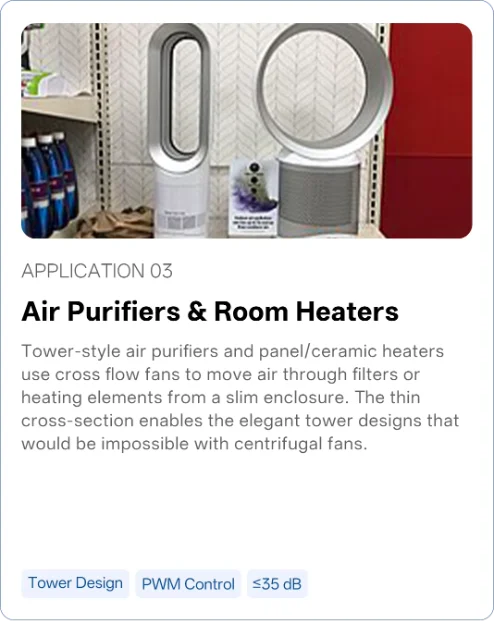
The unique combination of uniform airflow, thin profile, and scalable length makes cross flow fans the component of choice across multiple high-volume industries.
SELECTION GUIDE & COMPARISON
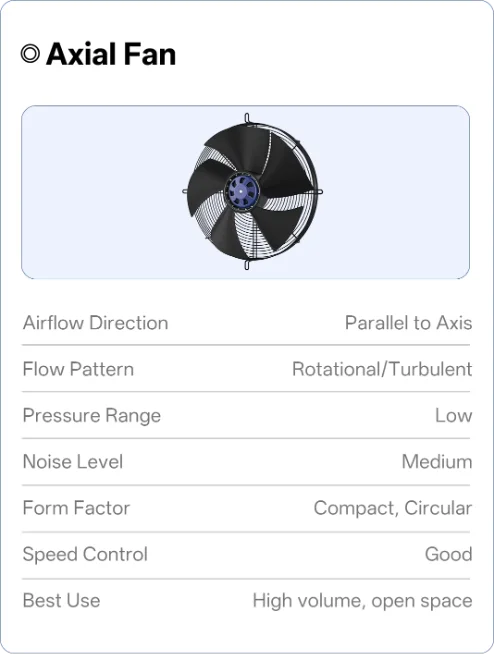
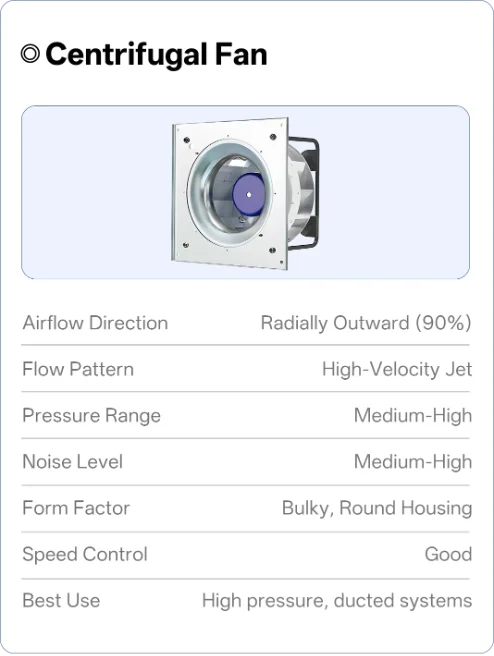
CROSS FLOW FAN VS. AXIAL VS. CENTRIFUGAL
Understanding how cross flow fan compare to the other major fan types is essential for correct application selection. Each typeexcels in a distinct operating regime.
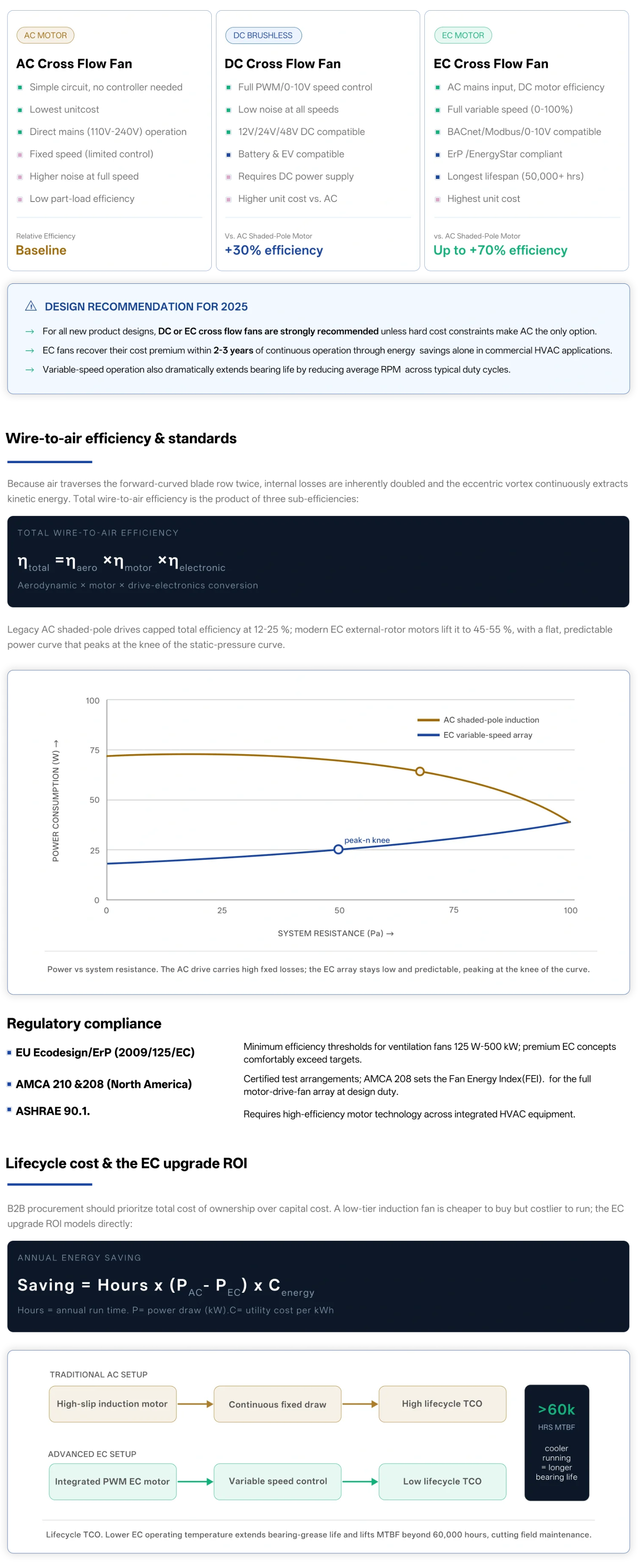
AC VS. DC VS. EC CROSS FLOW FAN
The motor type is the single most impactful specification decision for energy efficiency, noise performance, and lifespan. Here is a direct comparison.
COMPANY OVERVIEW
BLAUBERG MOTOREN CHINA
PART OF THE BLAUBERG GROUP SINCE 1900
specializes in EC brushless motors and intelligent fan solutions, delivering precise, maintenance-free, and energy-efficient air-moving performance throughout the product lifecycle.
标题
With localized manufacturing in China and integrated expertise in motor technology, electronic control, and aerodynamics, our EC fans are trusted by customers in over 90+ countries across ventilation, refrigeration, and air purification industries.
We combine German engineering standards with scalable, cost-competitive production to enable sustainable, high-performance solutions for a greener and healthier world.
GERMAN ENGINEERING QUALITY SMART MANUFACTURING VALUE – SINCE 1900
Offering an extensive range of EC motors, fans and intelligent ventilation solutions.
CERTIFICATIONS & COMPLIANCE
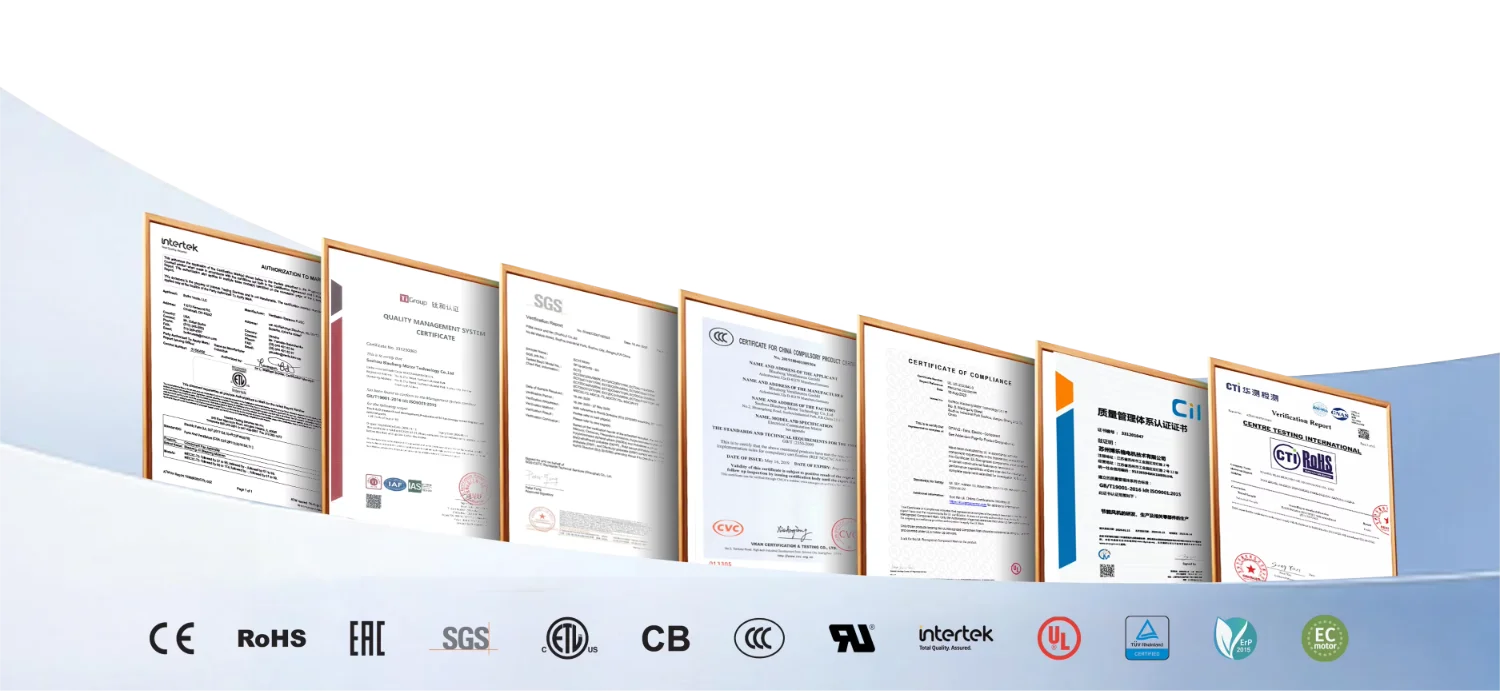
Every Blauberg EC fan carries the certifications your market demands. From UL/ETL for North America to CE for Europe, from ISO 9001 quality systems to CNAS-accredited laboratory testing — our 30+ certifications represent a complete, verifiable compliance infrastructure trusted by engineers in 90+ countries.
Trust badges for ErP 2026, CE, UL, RoHS, and IE5,ISO, EMC ,etc
INSTALLATION, INTEGRATION & TRENDS
TECHNOLOGY TRENDS
CFD-tuned asymmetric blade spacing spreads blade-pass noise into a broad white-noise spectrum, while EC control boards embed micro-sensors for predictive maintenance over Modbus RTU. Tightening indexes- EU Ecodesign sub-125 W and California Title 24- are phasing out fixed-speed induction models in favor of variable-speed brushless configurations.
FAQs
What is a cross flow fan used for?
Semi-Automatic PET Bottle Blowing hhh Machine Bottle Making Machine Bottle Moulding Machine. PET Bottle Making Machine is suitable for producing PET plastic containers and bottles in virtually.
What is the difference between a cross flow fan and an axial fan?
An axial fan moves air parallel to its rotation axis (like a propeller), producing a concentrated circular airflow pattern with some turbulence. A cross flow fan moves air perpendicularly across the impeller, producing a wide, flat, uniform laminar sheet across the full outlet length. Cross flow fans are quieter and better at distributing air evenly; axial fans deliver higher volumetric flow at lower cost for open, low-restriction applications.
How long does a cross flow fan last?
Cross few fans with ball bearings are typically rated for 40,000 to 50,000 operating hours -equivalent to 15-20 years of daily residential HVAC use. Sleeve bearing fans offer lower initial cost but shorter service life, particularly in vertical or high-temperature mounting orientations where lubrication migrates away from bearing contact surfaces.
Can cross flow fans be used with PWM speed control?
Yes – DC and EC cross flow fans support full variable-speed control via PWM signal (typically 0-100% duty cycle on a 25 kHz carrier) or 0-10V analog voltage. This enables quiet low-speed operation during partial-load conditions and fast ramp-up when maximum airflow is demanded. AC cross few fans can achieve two or three speed operation through tapped windings, but cannot achieve the continuous speed range of DC/EC motor types.
What is the difference between a cross flow fan and a cross flow blower?
The terms are used interchangeably throughout the industry. "Cross flow fan", "cross flow blower", "tangential fan", and "transverse fan" all refer to the same cylindrical impeller design with transverse airflow. Regional preference varies. "cross flow blower" is more common in North America, "tangential fan" in European technical literature, and "贯流风 (guanliu feng)" in Chinese-language specifications.
Are cross flow fans energy efficient?
Modern EC and brushless DC cross flow fans are highly energy efficient. EC motor designs can achieve up to 70% energy savings compared to traditional shaded-pole AC motors, and are up to 30% more efficient than older AC cross flow fan designs. Their variable-speed capability means they consume only the energy needed for the actual system load condition rather than running at full power continuously – a significant saving in HVAC applications that operate at partial load for 80-90% of annual hours.
Ordering and Pricing
Minimum order quantity: 1 piece
Volume pricing:
1–10 piece: US $12.62 / piece
11–500 piece: US $11.17 / piece
501+ piece: US $10.92 / piece
Ships from: China
Customization: OEM and ODM accepted on qualifying volumes.
Frequently Asked Questions
What is the minimum order quantity for this cross flow fan?
The standard minimum order quantity is 1 piece. Trial orders can usually be arranged for buyers evaluating the product before a full production run.
Which certifications does this cross flow fan carry?
It is supplied with ISO certified documentation, which covers the requirements of most import markets. Additional test reports can be issued on request.
Can the cross flow fan be supplied for my local voltage?
The standard configuration is 12V. Alternative voltage and frequency builds are available when specified at the time of order.
Do you accept OEM or custom branding?
Yes. Custom logo, colour, packaging and specification changes are accepted on qualifying order volumes. Send your artwork and technical requirements with your enquiry.
How long does production and delivery take?
In-stock configurations typically ship within 7–15 days. Customised or large-volume orders are usually produced in 25–35 days, confirmed on order.
About the Manufacturer
This product is produced by Suzhou Blauberg Motoren Technology Co., Ltd., based in China. The company 6 years as a verified Alibaba.com supplier, operates its own manufacturing, passed third-party supplier assessment. Browse the full Suzhou Blauberg Motoren Technology Co., Ltd. range on HVACR Nexus.
Specifications, certifications and images on this page are as published by the manufacturer and have not been
independently tested or verified by HVACR Nexus. Confirm the full specification and the approvals valid in your
market in writing before ordering.
Content & IP notice