
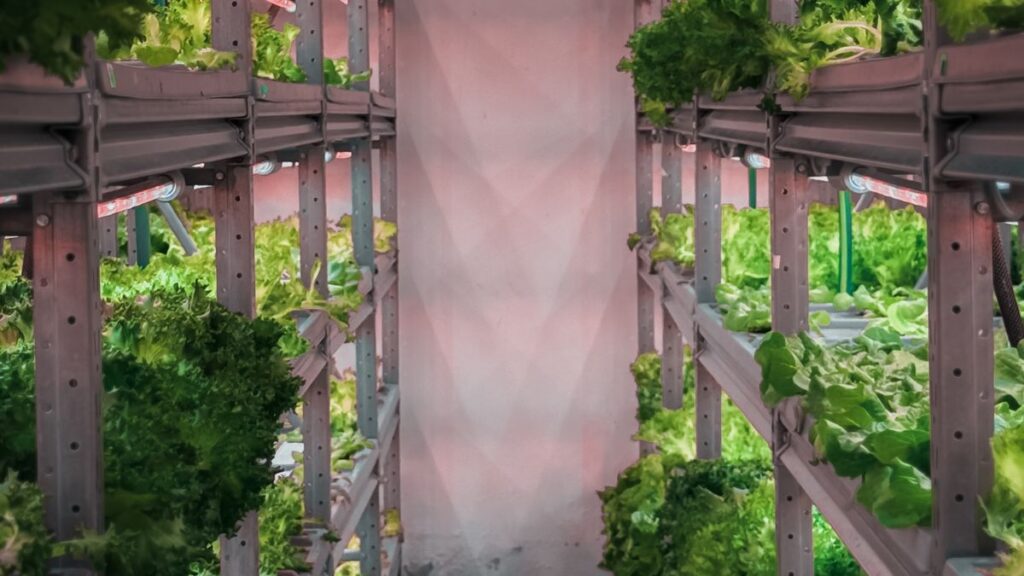
A sealed building where every watt of light becomes heat, and every litre the plants transpire has to be condensed back out — closer to a data centre than to a greenhouse.
- 19,327products across this application
- 2,447verified manufacturers
- 5equipment groups
WhatA closed system with no weather
Indoor vertical farming removes sunlight and outside air from the equation. LED lighting supplies the energy, and essentially all of it ends up as heat inside the building. The plants transpire continuously, so the space gains moisture at a steady rate with no natural ventilation to remove it. The result is a cooling and dehumidification duty that runs constantly and barely varies.
WhoWho buys it
Vertical farm operators and developers, container-farm manufacturers, research and plant-breeding facilities, and the mechanical contractors delivering controlled environment agriculture projects.
WhyWhy dehumidification dominates
This is the point most newcomers miss. A greenhouse vents moisture to atmosphere; a sealed farm cannot, so every litre the crop transpires must be condensed out mechanically. Latent load frequently exceeds sensible load, which means equipment selected on cooling capacity alone will hold temperature and let humidity climb until condensation forms on surfaces and disease follows. And the condensate is clean water worth recovering back to the nutrient system.
HowDesigning for constant load
Calculate latent and sensible load separately and size for the latent duty, which usually governs. Because the load is steady, part-load efficiency matters less than in a comfort system but continuous reliability matters far more — there is no thermal buffer and no weather to help. Distribute air at every tier: airflow at the canopy is what keeps leaf boundary layers thin, and a rack with uniform temperature but stagnant air still grows badly. Finally, capture heat from the lighting: it is a large, constant, low-grade source with an obvious use in water or space heating.
Equipment this application needs
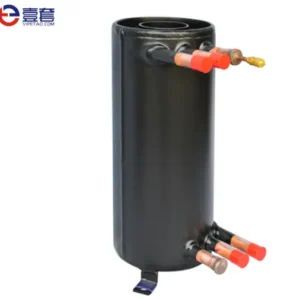 Cooling & dehumidification
Chilling Equipment939
Sized on latent load, which usually exceeds sensible in a sealed growing space.
Cooling & dehumidification
Chilling Equipment939
Sized on latent load, which usually exceeds sensible in a sealed growing space.
 Air handling
Centrifugal Fans11,344
EC plug fans in the air handling units, running continuously at stable duty.
Air handling
Centrifugal Fans11,344
EC plug fans in the air handling units, running continuously at stable duty.
 Tier-level circulation
Axial Flow Fans6,332
Airflow at the canopy — uniform temperature with stagnant air still grows a poor crop.
Tier-level circulation
Axial Flow Fans6,332
Airflow at the canopy — uniform temperature with stagnant air still grows a poor crop.
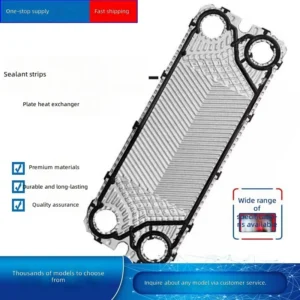 Heat recovery
Heat Exchangers364
Lighting heat is constant and substantial; recovering it changes the facility’s energy position.
Heat recovery
Heat Exchangers364
Lighting heat is constant and substantial; recovering it changes the facility’s energy position.
 Heat rejection
Dry Cooler348
Rejecting the lighting load, with free cooling available for much of the year.
Heat rejection
Dry Cooler348
Rejecting the lighting load, with free cooling available for much of the year.
What to check before you order
- EC Motor 2,500
- Continuous running at stable duty — efficiency compounds heavily.
- Variable Speed 2,411
- Trimming to actual load across the light and dark cycle.
- Stainless Steel 12,508
- Food production surfaces in a permanently humid space.
- Corrosion Resistant 2,232
- High humidity plus nutrient solution aerosols.
- Energy Saving 5,353
- Energy is the dominant operating cost of indoor farming — often the whole business case.
Products for this application
-

- 380V
- 18000-50000m3/h
- Stainless Steel
-

- 220 V
- 2500m³/h
- Power Source Electric
-
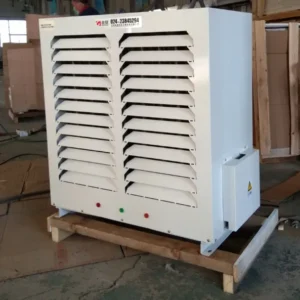
- 380V/50HZ
- Heating Capacity 6-40℃
- Power Source Electric
-

- 4000 m3/h
- Power Source Electric
- R410A
-

- DC 23~41V
- 48 in
- Power Source Solar
-

- 225 BTU
- Power Source Electric
- R454B
-
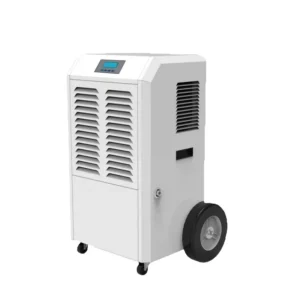
- 300 BTU
- Power Source Electric
- Refrigerant R410a/R290
-

- 120 V
- Size 4/5/6/8
- Power Source Electric
-
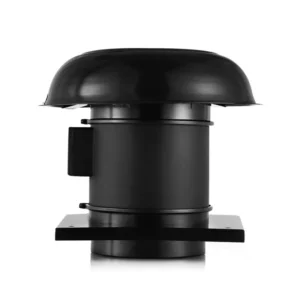
- 100-120V/220-240V
- Power Source Electric
- Material Plastic
-

- 380V/220V
- Power Source Electric
- Stainless Steel
-

- 220V 50HZ
- 9KG/H
- 900W
-

- 120 V
- 400 mm - 1530 mm
- Power Source Electric
Questions buyers ask
Why is dehumidification the main load in a vertical farm?
Can greenhouse equipment be used in a vertical farm?
Is the condensate worth recovering?
Related applications
Tell us about your vertical farm & indoor growing hvac project
Send the duty and site conditions and we will come back with matched equipment, price and lead time from the manufacturers listed here — usually within one working day.