
Aspiration and dust control for grain, feed and flour handling — where the dust itself is the explosion hazard and the fan has to move it without becoming an ignition source.
- 2,242products across this application
- 693verified manufacturers
- 5equipment groups
WhatAspiration, drying and dust control
Grain handling ventilation covers three duties: aspiration at transfer points where dust is generated, drying air through the grain mass to bring moisture down to a storage-safe level, and general dust control in the building. They share equipment types but are sized on completely different bases.
WhoWho buys it
Grain elevators and storage terminals, flour and feed mills, oilseed processors, malting plants, and the engineering contractors who build and retrofit them.
WhyWhy grain dust is treated as explosive
Suspended organic dust at the right concentration ignites, and in a confined structure that becomes an explosion — the reason grain elevators have a long and well-documented incident history. Every part of the aspiration system is therefore a potential ignition source: a fan bearing running hot, a metal fragment striking an impeller, or static in ductwork. Equipment for this scenario is selected to eliminate those sources, not merely to move air.
HowSpecifying for dust-laden air
Use radial or paddle-blade impellers throughout the dusty stream — curved blades accumulate deposits that unbalance the rotor and eventually contact the housing. Specify non-sparking materials, bonded and earthed ductwork, and bearing temperature monitoring on continuously running units. Size aspiration on capture velocity at each transfer point rather than on total building volume, and keep drying air separate: that duty is about moisture removal through the grain mass and follows the crop, not the building.
Equipment this application needs
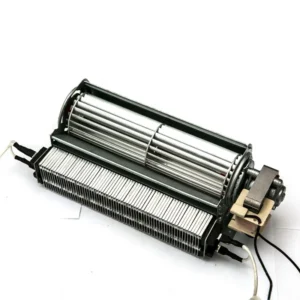 Aspiration & dust extract
Radial Fans288
Straight radial blades pass grain dust without building deposits — the defining requirement here.
Aspiration & dust extract
Radial Fans288
Straight radial blades pass grain dust without building deposits — the defining requirement here.
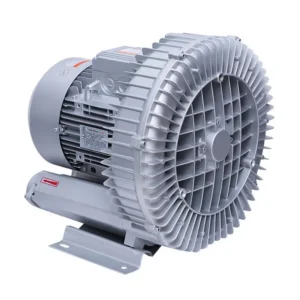 Drying & conveying air
Blowers416
Pushing air through the grain mass and pneumatic conveying between stages.
Drying & conveying air
Blowers416
Pushing air through the grain mass and pneumatic conveying between stages.
 Filtered clean-side extract
Centrifugal Fans813
After the filter, where the air is clean, efficiency matters more than deposit tolerance.
Filtered clean-side extract
Centrifugal Fans813
After the filter, where the air is clean, efficiency matters more than deposit tolerance.
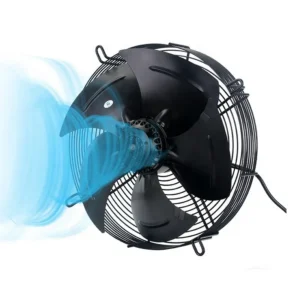 Building & headhouse ventilation
Axial Flow Fans752
General air change in elevator legs and headhouses.
Building & headhouse ventilation
Axial Flow Fans752
General air change in elevator legs and headhouses.
 Bearings, belts & impellers
Ventilation Fan Parts261
Abrasive dust makes these consumables; carrying spares avoids stopping intake at harvest.
Bearings, belts & impellers
Ventilation Fan Parts261
Abrasive dust makes these consumables; carrying spares avoids stopping intake at harvest.
What to check before you order
- Explosion Proof 252
- Combustible dust atmosphere. Applies to the whole assembly and to the zone classification of the plant.
- Industrial Grade 1,636
- Abrasive service with continuous running through the intake season.
- High Temperature 369
- Drying air duty on the hot side of the system.
- 380V 2,141
- Three-phase for aspiration and drying plant.
- Corrosion Resistant 266
- Damp grain and fumigants attack standard finishes.
Products for this application
-
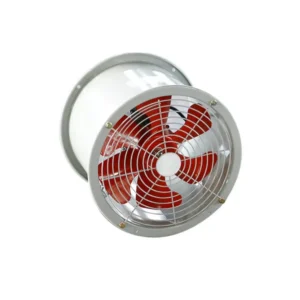
- 220 V
- Power Source Electric
- Carbon Steel
-
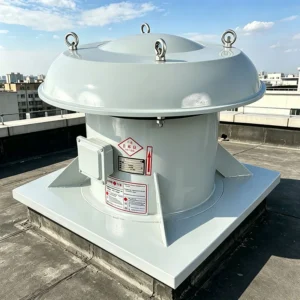
- 220V
- Power Source Electric
- Material Fiberglass
-
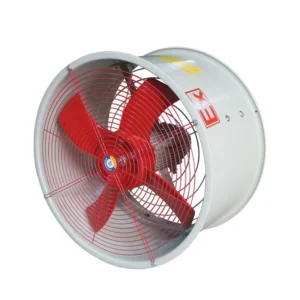
- 220V
- Power Source Electric
- Cast Iron
-
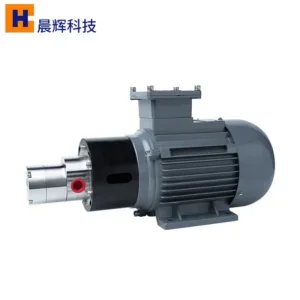
- AC220V/380V
- Power Source Electric
- Stainless Steel
-
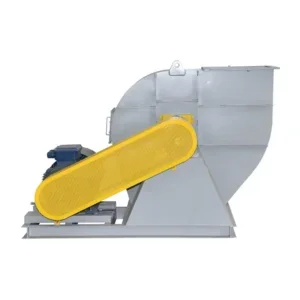
- 380V/50Hz
- Size Range 3.2-30dm
- Stainless steel
-
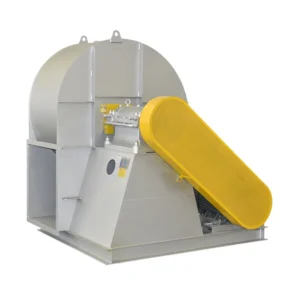
- 380V/50Hz
- 2.8-22 mm
- Stainless steel
-
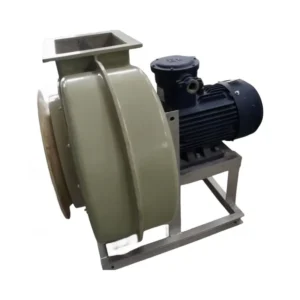
- 400 V
- 2300~12000m³/h
- Blade Material FRP
-
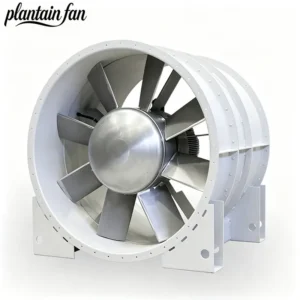
- 380 V
- 280mm-2000mm
- Power Source Electric
-
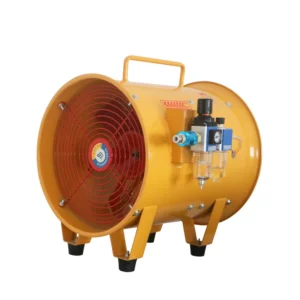
- 2880~5720m³/h
- 65dB (a)
-
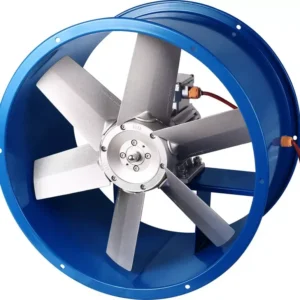
Steel Fan, 380V, 1000mm, Axial
$110.00- Power Source Electric
- Aluminum Alloy
-
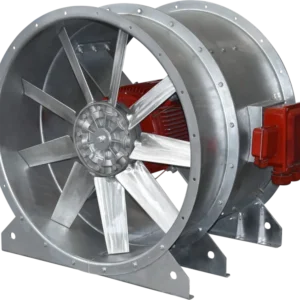
- 380V/50Hz
- 5000-94561 m³/h
- Size Range 5.6-10dm
-
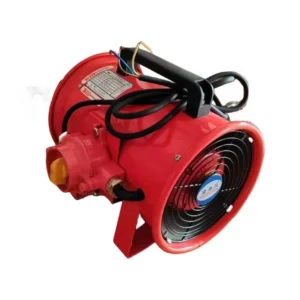
- 220V/50HZ
- 200mm
- 230W
Questions buyers ask
Why are radial fans specified for grain dust rather than centrifugal?
What makes grain dust an explosion risk?
Is drying air the same system as aspiration?
Related applications
Tell us about your grain handling & dust extraction project
Send the duty and site conditions and we will come back with matched equipment, price and lead time from the manufacturers listed here — usually within one working day.