
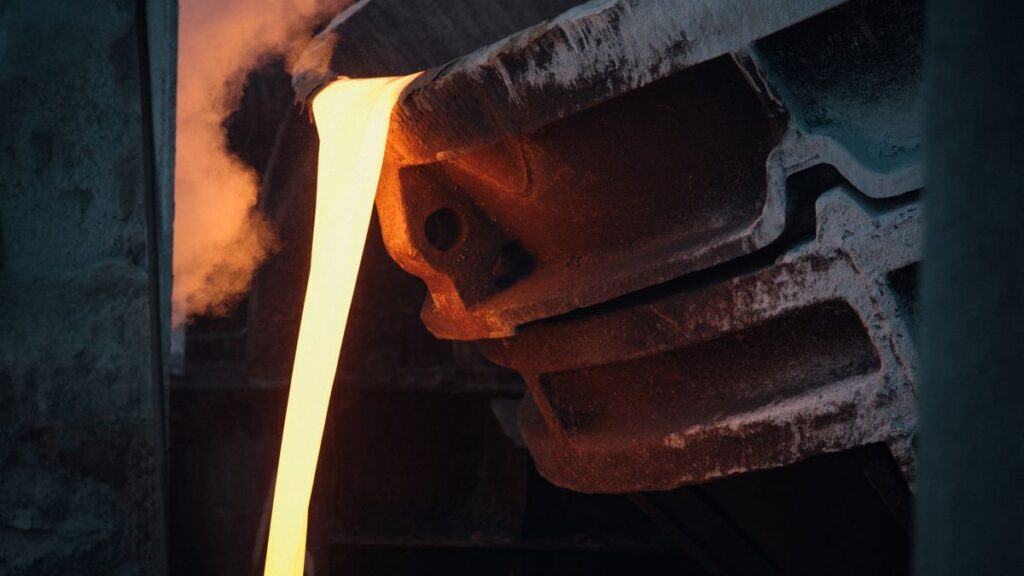
Moving air that is genuinely hot — furnace, kiln and casting hall extraction where the temperature of the airstream, not its volume, decides what equipment survives.
- 19,095products across this application
- 2,242verified manufacturers
- 5equipment groups
WhatExtraction where the air is the hazard
Foundry ventilation covers furnace and ladle extraction, casting and pouring bay hoods, cooling line extraction, and general hall ventilation to keep the working environment survivable. What sets it apart is airstream temperature: furnace extract can run several hundred degrees, and general hall air is far above ambient all year.
WhoWho buys it
Iron, steel and non-ferrous foundries, forging plants, heat treatment shops, glass and ceramics producers, and the refractory and plant contractors who build for them.
WhyWhy temperature governs the selection
Heat attacks a fan in several ways at once. Bearing grease degrades and bearings fail early; motor insulation ages; the impeller expands and can foul the housing; and the air itself is far less dense, so a fan moving the same volume delivers substantially less mass and develops less pressure than its ambient rating implies. A fan chosen on volume alone will both underperform and fail early.
HowSelecting for the actual airstream temperature
Establish the airstream temperature at the fan — not at the furnace, since dilution air upstream may have cooled it usefully. De-rate the fan for air density at that temperature; ignoring this is why hot systems commonly under-deliver. Then choose construction to match: shaft coolers, heat slingers or bearings mounted outside the airstream, and high-temperature materials. Finally consider recovery: foundry extract carries enormous energy, and recovering even part of it changes the plant’s energy position.
Equipment this application needs
 Furnace & hood extract
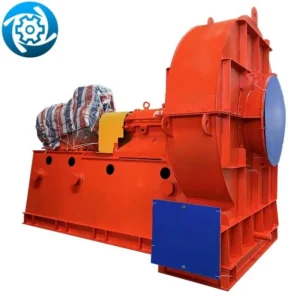
Centrifugal Fans11,344
High-temperature construction with bearings isolated from the hot airstream.
Furnace & hood extract
Centrifugal Fans11,344
High-temperature construction with bearings isolated from the hot airstream.
 Hall & roof ventilation
Axial Flow Fans6,332
Large-volume hot air removal from the casting hall roof.
Hall & roof ventilation
Axial Flow Fans6,332
Large-volume hot air removal from the casting hall roof.
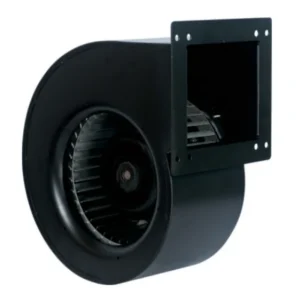 Particulate-laden hot gas
Radial Fans576
Where the extract carries sand, scale or fettling dust as well as heat.
Particulate-laden hot gas
Radial Fans576
Where the extract carries sand, scale or fettling dust as well as heat.
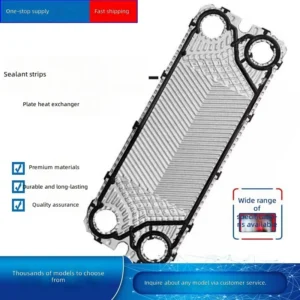 Heat recovery
Heat Exchangers364
The extract stream carries far more energy than the plant’s heating demand — recovery is normally the fastest payback available.
Heat recovery
Heat Exchangers364
The extract stream carries far more energy than the plant’s heating demand — recovery is normally the fastest payback available.
 Operator spot cooling
Industrial Fans1,055
Directed airflow at working positions; in a casting hall this is a safety measure.
Operator spot cooling
Industrial Fans1,055
Directed airflow at working positions; in a casting hall this is a safety measure.
What to check before you order
- High Temperature 2,144
- The defining specification. Establish the temperature at the fan, not at the source.
- Industrial Grade 12,410
- Heavy continuous duty with serviceable bearings.
- Corrosion Resistant 2,232
- Combustion products and flux fumes are aggressive once cooled.
- Heat Recovery 710
- Recovering extract heat is normally the largest single saving available in a foundry.
- 380V 15,604
- Three-phase for extraction plant of this scale.
Products for this application
-

- AC 110-120V
- Aluminum Alloy
- 1900-3200RPM
-

- 115V
- aluminium alloy
-

Cross Flow Fans, 16-tray, 380v, 28kw
$2,650.00- 380v
- 28kw
-

- 380 V
- High Airflow
- Stainless Steel
-

- 380 V
- Stainless Steel
-
- 415V
- 300~3000mm
- Corded Electric
-
- Voltage Customizable
- Size Customizable
- Stainless Steel
-
View & Inquire

-

- 220-240V
- Corded Electric
- Carbon Steel
-

- 220 V
- 3 W
- Material Metal
-

- 220V/380V
- Carbon Steel
-
- 380V
- 380v
- Galvanized sheet
Questions buyers ask
Why does a fan move less air when the air is hot?
How are bearings protected in high-temperature fans?
Is heat recovery worth it on foundry extract?
Related applications
Tell us about your foundry & furnace heat extraction project
Send the duty and site conditions and we will come back with matched equipment, price and lead time from the manufacturers listed here — usually within one working day.