
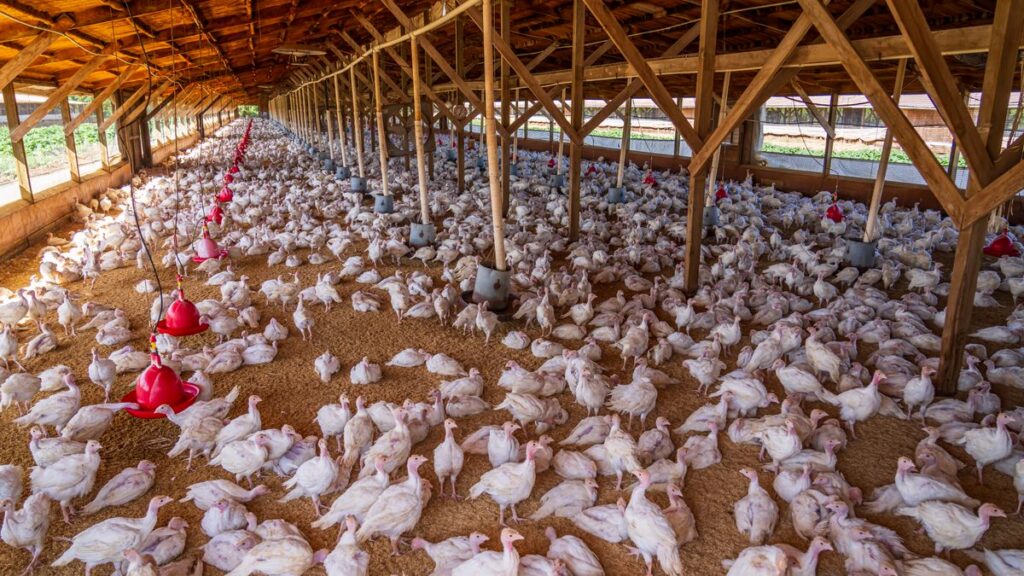
Ventilation that has to change character completely over a 42-day cycle — from brooding chicks that must not feel a draught, to full-grown birds that need tunnel velocity to survive a hot afternoon.
- 9,418products across this application
- 1,704verified manufacturers
- 5equipment groups
WhatOne house, three ventilation regimes
A broiler crop moves through three distinct requirements. In the brooding week, chicks need 32–34 °C and almost no air movement, with ventilation running only to remove moisture and ammonia. Through the growing phase the rate climbs steadily as the birds put on weight and produce more heat and moisture. In the final weeks in hot weather, the house runs full tunnel — maximum airflow along its length to cool birds by wind chill.
WhoWho buys it
Integrators operating contract grower networks, independent broiler farmers, farm construction contractors and regional agricultural equipment dealers who stock for their grower base.
WhyWhy the failure mode is total
A tunnel-ventilated house on a hot day depends entirely on continuous airflow. If the fans stop, house temperature climbs beyond the birds’ tolerance within roughly half an hour and the whole flock can be lost. That is why backup power, an alarm independent of the controller, and naturally ventilated fallback openings are part of the specification rather than optional extras.
HowSizing the modes separately
Minimum ventilation is calculated from the birds’ moisture and ammonia output at the coldest expected condition — it is an air-quality duty, and running it harder simply wastes brooding heat. Tunnel ventilation is calculated from the target air velocity along the house at the hottest condition, then converted to fan capacity at the static pressure the house actually operates at, with inlet baffles and evaporative pad in place. Rating fans on free-air airflow is the classic error and produces houses that cannot reach tunnel velocity.
Equipment this application needs
 Tunnel fans
Axial Flow Fans6,332
Large-diameter low-speed units producing house-length velocity. Compare on airflow at operating static pressure, never free-air.
Tunnel fans
Axial Flow Fans6,332
Large-diameter low-speed units producing house-length velocity. Compare on airflow at operating static pressure, never free-air.
 Minimum ventilation
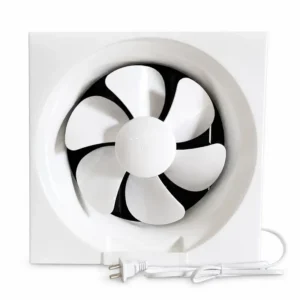
Exhaust Fans1,012
Small, precisely controlled units running intermittently in cold weather for air quality alone.
Minimum ventilation
Exhaust Fans1,012
Small, precisely controlled units running intermittently in cold weather for air quality alone.
 Evaporative pad cooling
Air Coolers659
Adds several degrees at the tunnel inlet in dry climates, on top of the wind-chill effect.
Evaporative pad cooling
Air Coolers659
Adds several degrees at the tunnel inlet in dry climates, on top of the wind-chill effect.
 Brooding heat
Industrial Heating Equipment861
Chicks need 32–34 °C in week one — a heating load far larger than the adult flock ever needs.
Brooding heat
Industrial Heating Equipment861
Chicks need 32–34 °C in week one — a heating load far larger than the adult flock ever needs.
 Shutters, belts & motors
Ventilation Fan Parts554
The consumables that decide whether the house runs through the next crop.
Shutters, belts & motors
Ventilation Fan Parts554
The consumables that decide whether the house runs through the next crop.
What to check before you order
- Corrosion Resistant 2,232
- Ammonia plus high-pressure washdown between crops. Decides whether a fan lasts two years or ten.
- Industrial Grade 12,410
- Months of continuous running with no maintenance access while the house is occupied.
- Energy Saving 5,353
- Fan energy is one of the largest controllable costs per bird produced.
- 380V 15,604
- Three-phase for tunnel fan banks.
- IP55 / IP68 3,348
- Sealed motors that survive direct washing between crops.
Products for this application
-
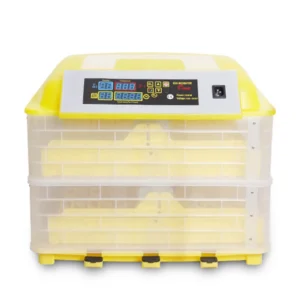
- 12 Chicken eggs
- 32.5*21*12.5CM
- Material ABS
-
- 12v
- Material PP
-

- 380V-480V
- 66000 m3/h
- Power Source Electric
-

- 380V
-
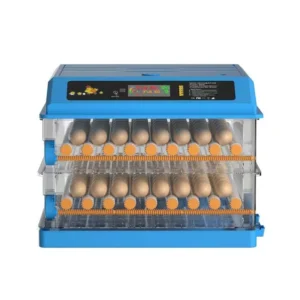
- 128 chicken eggs
- Material ABS
-

- 110V/220V
- 2000 chicken eggs
- Material PE
-
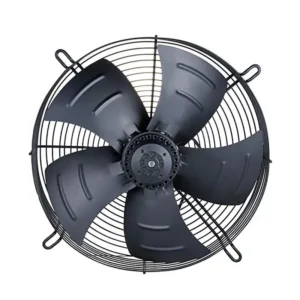
- 220V/380V
- Power Source Electric
- Blade Material metal
-

- Blade Material ss430
-

- Power Source Electric
-

- 220v/110v
- 30pcs Chicken Eggs
- Material PP
-

- 220V/380V/400V/Oth
- Power Source Electric
- Stainless Steel
-

- 380V-480V
- Power Source Electric
- Blade Material Alloy
Questions buyers ask
How many tunnel fans does a broiler house need?
What ventilation do chicks need in the brooding week?
How long does a flock survive if ventilation fails?
Related applications
Tell us about your broiler house ventilation project
Send the duty and site conditions and we will come back with matched equipment, price and lead time from the manufacturers listed here — usually within one working day.