
Adding ambient heat rejection to an existing hall so the compressors run for a fraction of the year — normally the largest energy saving available to a facility that is already built.
- 1,673products across this application
- 656verified manufacturers
- 5equipment groups
WhatRejecting heat without a compressor
Free cooling uses ambient air to reject heat whenever it is cool enough, leaving the chillers idle. Indirect systems circulate glycol through outdoor dry coolers and transfer heat through a plate exchanger to the chilled water loop; direct systems bring outside air into the hall. Indirect is the usual retrofit choice because it does not expose IT equipment to outside air quality or humidity swings.
WhoWho buys it
Colocation operators under PUE commitments, enterprise facilities managers facing rising energy costs, and the mechanical contractors delivering upgrades into halls that must stay live throughout.
WhyWhy the chilled water temperature decides everything
The number of free-cooling hours you get is set by how warm you can let the chilled water run. Modern IT equipment tolerates a supply temperature far above the 6–7 °C that older halls were designed around; raising it to 18–20 °C can turn a marginal retrofit into one that free-cools for most of the year. In many halls, raising the water temperature is the actual project and the dry coolers merely follow from it.
HowRetrofitting into a live hall
Start by confirming what supply temperature the installed IT equipment genuinely tolerates, then calculate free-cooling hours against local weather data at that temperature. Size dry coolers for the changeover condition rather than the design day — oversizing here buys hours cheaply. Design the changeover control carefully, including the partial mode where ambient does some of the work and the chiller trims the rest, since that mode covers many of the annual hours. And plan the tie-ins so the hall never loses cooling: this is the part of the project that carries real risk.
Equipment this application needs
 Ambient heat rejection
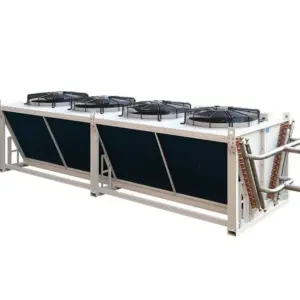
Dry Cooler349
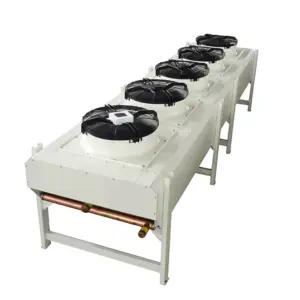
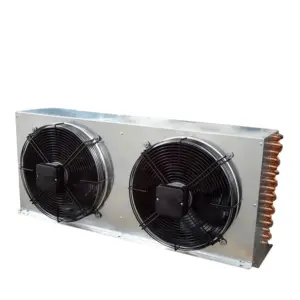
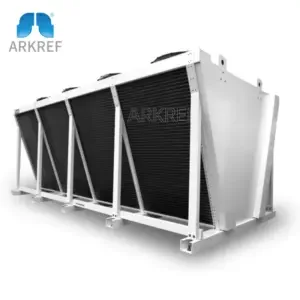
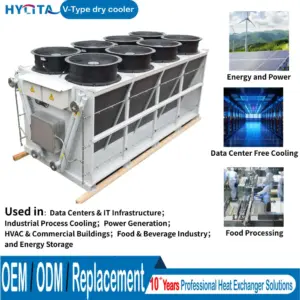
The core of the retrofit. Size on changeover conditions, not the design day.
Ambient heat rejection
Dry Cooler349
The core of the retrofit. Size on changeover conditions, not the design day.
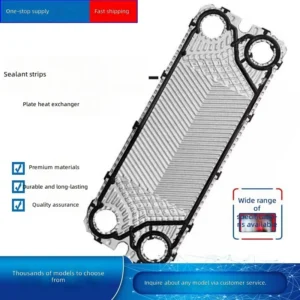 Loop separation
Heat Exchangers362
Plate exchangers between glycol and chilled water — the approach temperature here directly sets free-cooling hours.
Loop separation
Heat Exchangers362
Plate exchangers between glycol and chilled water — the approach temperature here directly sets free-cooling hours.
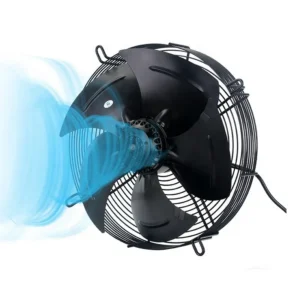 Cooler fan arrays
Axial Flow Fans672
EC drives so fan power falls with the cube of speed through the many part-load hours.
Cooler fan arrays
Axial Flow Fans672
EC drives so fan power falls with the cube of speed through the many part-load hours.
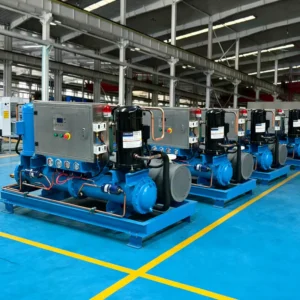 Existing mechanical plant
Chilling Equipment88
Retained for the hours ambient cannot cover; often replaced later once run hours collapse.
Existing mechanical plant
Chilling Equipment88
Retained for the hours ambient cannot cover; often replaced later once run hours collapse.
 Valves & controls
Refrigeration & Heat Exchange Parts120
Changeover valves and control integration — where retrofits usually go wrong.
Valves & controls
Refrigeration & Heat Exchange Parts120
Changeover valves and control integration — where retrofits usually go wrong.
What to check before you order
- EC Motor 204
- Part-load efficiency is the whole point; free cooling spends most hours at part load.
- Variable Speed 106
- Fan power falls with the cube of speed — the largest single saving in the system.
- Energy Saving 1,205
- The retrofit is justified on energy alone, so equipment efficiency is the business case.
- Low Noise 654
- Dry coolers usually go on a roof or in a yard with a night-time noise limit.
- Corrosion Resistant 260
- Outdoor equipment with a 15-year service expectation.
Products for this application
-
 View & Inquire
Cooling Towers, HPC
$300.00 -
- 220 V
- Aluminum Alloy
- 58.9dB(a)~91dB(a)
-
- 12 V
- Power Source Electric
- Blade material Plastic
-
- 400 V
- 380V/3PH/50HZ
-
View & Inquire
-
- Noise 30dBA
-
- 5000m³/h
-
- 380 V
-
View & Inquire
-
- Material Aluminum
-
View & Inquire
-
- 380V
- Noise 70dba
Questions buyers ask
How many hours a year will free cooling actually run?
Direct or indirect free cooling for a retrofit?
What is the main risk in a free cooling retrofit?
Related applications
Tell us about your free cooling retrofit project
Send the duty and site conditions and we will come back with matched equipment, price and lead time from the manufacturers listed here — usually within one working day.