
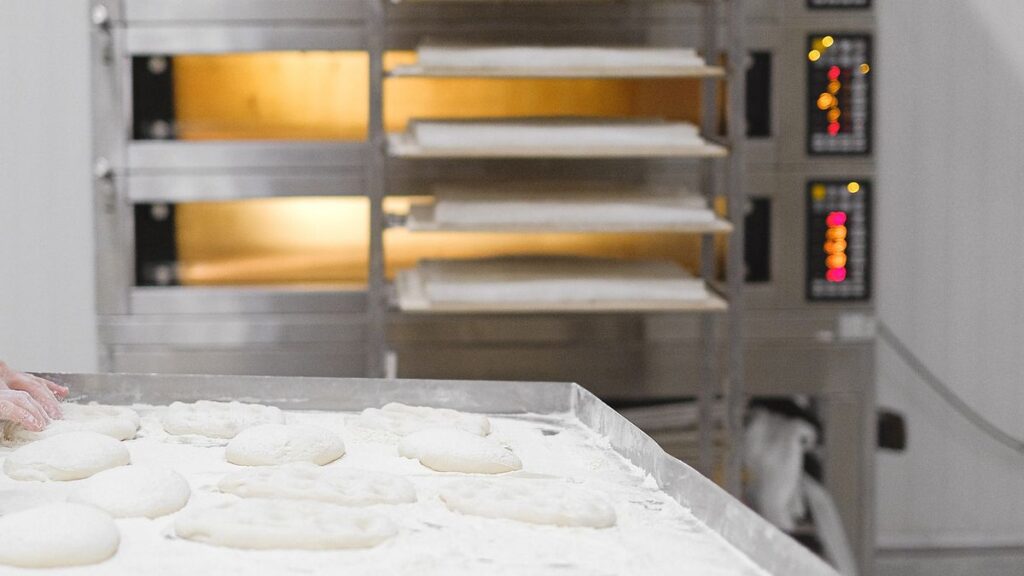
Ovens and provers produce heat and steam rather than grease — a different extract problem from a cooking line, and one where condensation causes most of the damage.
- 18,901products across this application
- 2,442verified manufacturers
- 5equipment groups
WhatHeat and steam, not grease
A bakery’s extract carries oven heat, large volumes of steam from baking and from steam-injected ovens, and flour dust from the mixing area. Grease is a minor component compared with a cooking line. That changes the whole design: the dominant problem is condensation as moist extract air cools in the ductwork, not grease accumulation.
WhoWho buys it
Commercial and wholesale bakeries, in-store bakery operations in supermarkets, patisserie and pastry producers, and the equipment suppliers fitting out production lines.
WhyWhy condensation is the failure mode
Steam-laden extract cooling in an unlagged duct condenses, and that condensate runs back towards the fan or drips out of joints. It corrodes ductwork from the inside, causes hygiene problems, and eventually reaches the motor. Meanwhile the humidity that fails to leave the building settles on cold surfaces in the production area. Both problems are designed out at the outset or lived with permanently.
HowGetting the moisture out
Extract close to the source, hood the oven doors specifically — the steam release when a door opens is the largest single event of the cycle. Insulate and fall ductwork back towards drainage points so condensate has somewhere to go. Provide make-up air that is tempered, because pulling cold outside air into a bakery causes condensation on every cold surface it meets. Handle flour dust in the mixing area as a separate system with its own filtration: it is fine, combustible, and does not belong in the oven extract.
Equipment this application needs
 Oven & prover extract
Centrifugal Fans11,344
High-temperature construction with condensate drainage designed into the installation.
Oven & prover extract
Centrifugal Fans11,344
High-temperature construction with condensate drainage designed into the installation.
 General & make-up air
Axial Flow Fans6,332
Production area air change and tempered replacement air.
General & make-up air
Axial Flow Fans6,332
Production area air change and tempered replacement air.
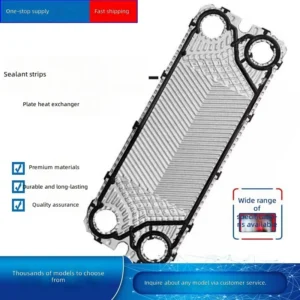 Heat recovery
Heat Exchangers364
Oven extract is hot and continuous — one of the better recovery opportunities in food production.
Heat recovery
Heat Exchangers364
Oven extract is hot and continuous — one of the better recovery opportunities in food production.
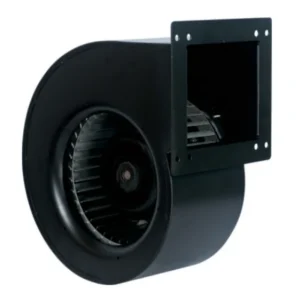 Flour dust extraction
Radial Fans576
Straight blades pass fine flour without building deposits; combustible dust rules apply.
Flour dust extraction
Radial Fans576
Straight blades pass fine flour without building deposits; combustible dust rules apply.
 Prover conditioning
Industrial Heating Equipment861
Provers need controlled warmth and humidity, which is a conditioning duty rather than ventilation.
Prover conditioning
Industrial Heating Equipment861
Provers need controlled warmth and humidity, which is a conditioning duty rather than ventilation.
What to check before you order
- High Temperature 2,144
- Oven extract runs hot and continuously.
- Corrosion Resistant 2,232
- Condensate is the main cause of duct and fan failure in bakeries.
- Stainless Steel 12,508
- Food production hygiene and repeated cleaning.
- Explosion Proof 2,418
- Required where flour dust is handled — it is a combustible dust.
- Heat Recovery 710
- Continuous hot extract makes recovery unusually attractive here.
Products for this application
-

- AC 110-120V
- Aluminum Alloy
- 1900-3200RPM
-

- 115V
- aluminium alloy
-

Cross Flow Fans, 16-tray, 380v, 28kw
$2,650.00- 380v
- 28kw
-

- 380 V
- High Airflow
- Stainless Steel
-

- 380 V
- Stainless Steel
-
- 415V
- 300~3000mm
- Corded Electric
-
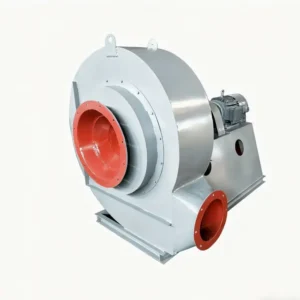
- Voltage Customizable
- Size Customizable
- Stainless Steel
-
View & Inquire

-

- 220-240V
- Corded Electric
- Carbon Steel
-

- 220 V
- 3 W
- Material Metal
-

- 220V/380V
- Carbon Steel
-
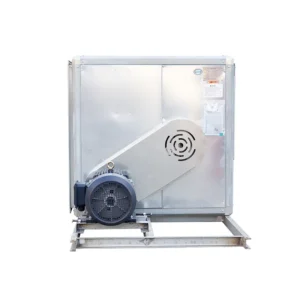
- 380V
- 380v
- Galvanized sheet
Questions buyers ask
Why does bakery ductwork corrode so quickly?
Is flour dust really an explosion risk?
Does a bakery need tempered make-up air?
Related applications
Tell us about your bakery & oven extraction project
Send the duty and site conditions and we will come back with matched equipment, price and lead time from the manufacturers listed here — usually within one working day.