
Capturing weld fume at the arc rather than diluting it across the shop — the difference between meeting an exposure limit and merely moving the problem around.
- 2,124products across this application
- 639verified manufacturers
- 5equipment groups
WhatCapture at source, or dilute
Two approaches exist and they are not interchangeable. Local exhaust captures fume at the arc, through an on-torch extractor, a movable hood or a downdraught bench, and needs a modest volume at high suction. General ventilation dilutes what escapes across the whole workshop, and needs a very large volume at low pressure. Most compliant installations use both, sized separately.
WhoWho buys it
Fabrication and structural steel shops, shipyards and rail workshops, automotive body repair, training centres, and the occupational hygiene consultants who specify after an exposure survey.
WhyWhy dilution alone rarely passes
Welding fume is respirable metal oxide, and for stainless and coated steels it contains hexavalent chromium and manganese compounds with very low exposure limits. Diluting to below those limits across an entire workshop volume takes an implausible air change rate. Capture at the arc removes the fume before it reaches the welder’s breathing zone, which is what an exposure measurement actually reflects.
HowSizing the two systems separately
For source capture, work from the capture velocity needed at the arc and the distance the hood sits from it — effectiveness falls off with the square of that distance, so hood placement matters more than fan size. For general ventilation, size on the workshop volume and the residual fume that escapes capture. Then check that the fan holds its duty against filter resistance, which rises steeply as cartridges load with fine particulate.
Equipment this application needs
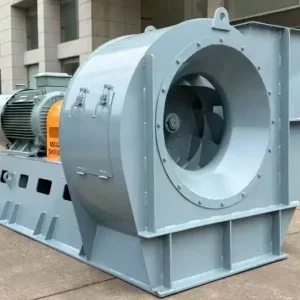 High-vacuum extraction
Centrifugal Fans702
Source capture needs suction rather than volume — backward-curved and high-pressure impellers.
High-vacuum extraction
Centrifugal Fans702
Source capture needs suction rather than volume — backward-curved and high-pressure impellers.
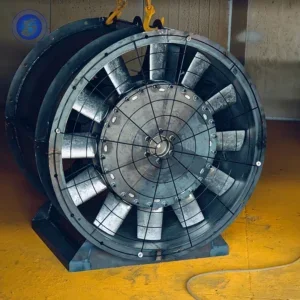 General workshop ventilation
Axial Flow Fans672
Large volumes at low resistance to dilute what escapes capture.
General workshop ventilation
Axial Flow Fans672
Large volumes at low resistance to dilute what escapes capture.
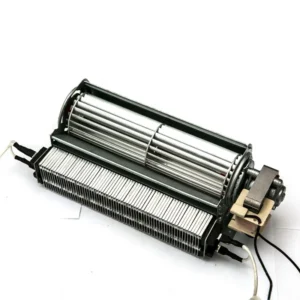 Particulate-laden air
Radial Fans288
Straight radial blades pass fine particulate without building deposits that unbalance the impeller.
Particulate-laden air
Radial Fans288
Straight radial blades pass fine particulate without building deposits that unbalance the impeller.
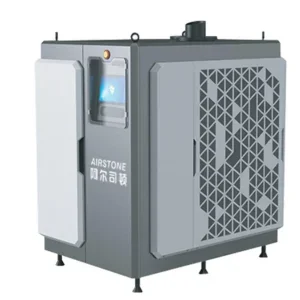 Compressed & process air
Blowers411
Filter cleaning pulses and shielding gas handling around the cell.
Compressed & process air
Blowers411
Filter cleaning pulses and shielding gas handling around the cell.
 Operator cooling
Industrial Fans269
Welders work in heavy PPE next to a heat source; spot cooling is a real requirement, not a comfort extra.
Operator cooling
Industrial Fans269
Welders work in heavy PPE next to a heat source; spot cooling is a real requirement, not a comfort extra.
What to check before you order
- Industrial Grade 977
- Continuous duty in a hot, dusty shop with minimal maintenance access.
- High Temperature 250
- Extract air close to the arc carries significant heat.
- Variable Speed 72
- Matches suction to the number of stations actually welding.
- Explosion Proof 195
- Required where aluminium or magnesium dust is present in the same extract system.
- 380V 1,427
- Three-phase for multi-station extraction plant.
Products for this application
-
- 220v-660v
- 60 BTU
- Power Source Electric
-
- 110 V
- 15 BTU
- Diesel; waste oil
-
- 120-20000kw
- Stainless Steel
-
- 220v/110V
- 220V-240V
-
- 50-360kw
- Stainless Steel
-
- 110V-600V
- Power Source Electric
- Stainless Steel
-
- 380 V
- Power Source Electric
- Stainless Steel
-
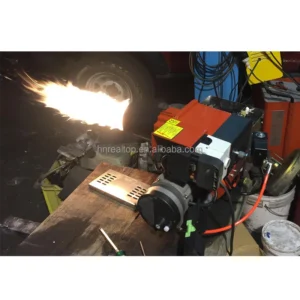
- 230V/50HZ
-
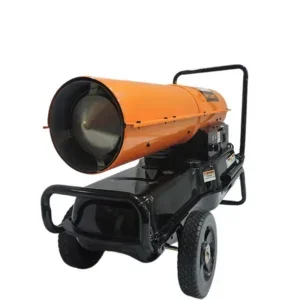
Oil Heater, 220-240V, Rapid
$98.30- 220-240V/50Hz
- Heating Capacity Rapid
- Power Source Diesel
-

Ylw Thermal Oil Heater, Carbon Steel
$6,000.00- Carbon Steel
-
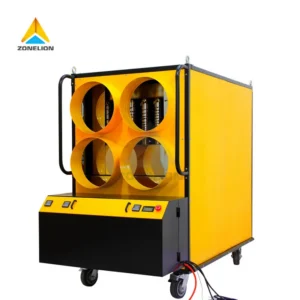
- 220 V
- Stainless Steel
-
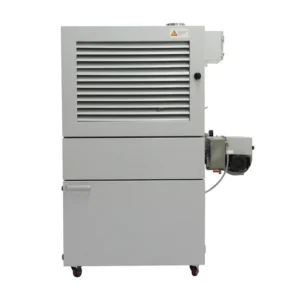 View & Inquire
Burning Workshop Oil Heater, 400, 000Btu
$2,450.00
Questions buyers ask
Is general ventilation enough for welding fume?
Why does hood distance matter so much?
What happens to extraction performance as filters load?
Related applications
Tell us about your welding fume extraction project
Send the duty and site conditions and we will come back with matched equipment, price and lead time from the manufacturers listed here — usually within one working day.